Equipment from China for agricultural product processing
We offer the latest models of popular equipment and processing lines for agricultural products. Our competitive prices and transparent terms are complemented by fast delivery.
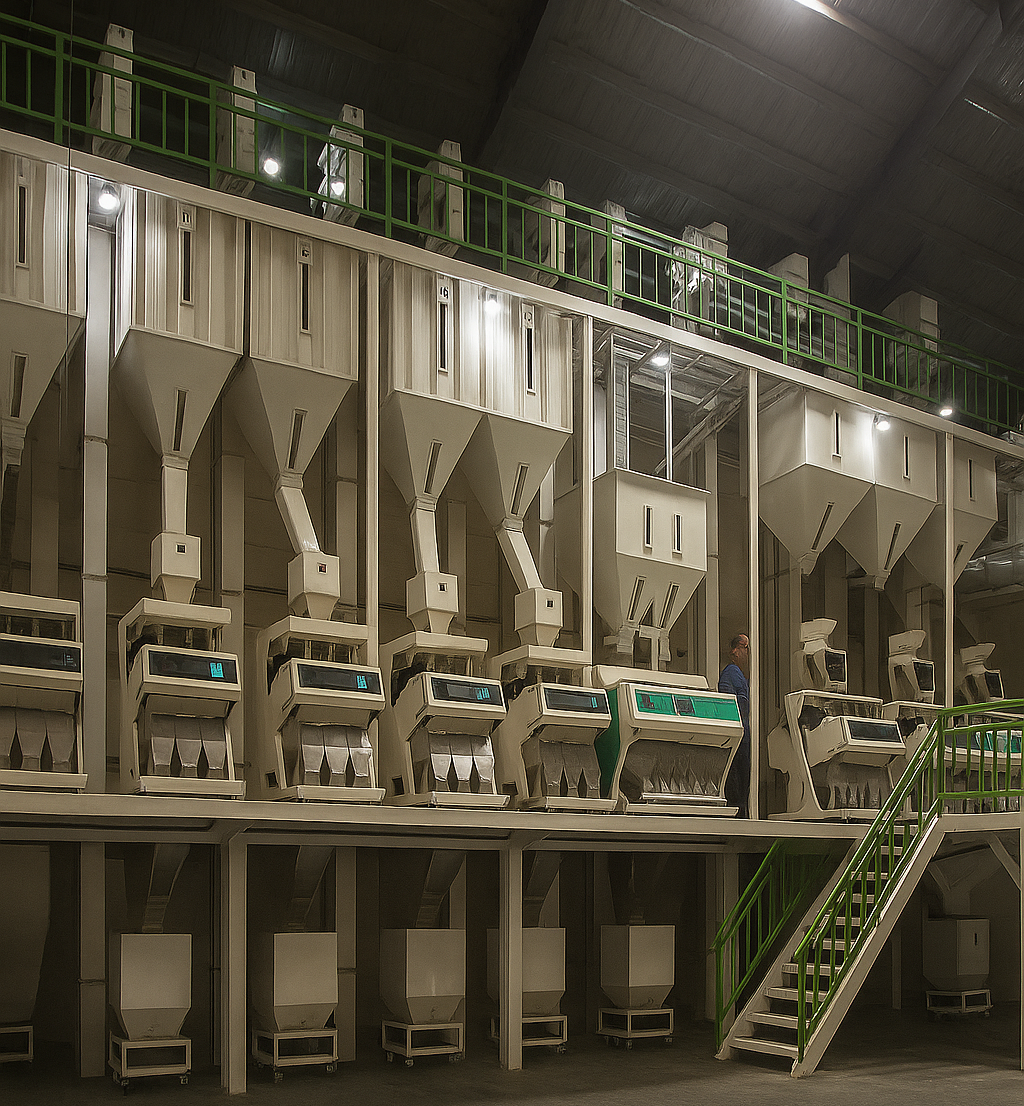
Mung Bean Processing and Sorting Line What it is: A mung bean processing and sorting line is specialized equipment designed for handling legume crops such as mung beans. It automates the processes of cleaning, sorting, and preparing mung beans for packaging, ensuring high quality of the final product.
What it can produce: • Processed mung beans: cleaned, selected, and ready-to-use mung beans. • Semi-finished products: such as frozen or dried legumes, as well as legume mixes for soups and other dishes.
How it works:
Receiving and cleaning: Mung beans enter the line, where they undergo initial cleaning from dust, stones, and other impurities using vibrating screens and magnetic separators.
Sorting: After cleaning, the beans are sorted by size and quality using optical sorters that analyze color and shape, removing defective or damaged beans.
Blanching (if needed): In some cases, beans are blanched to preserve color and texture, and to eliminate microorganisms.
Drying: After processing, the beans are dried to an optimal moisture level, preventing spoilage and extending shelf life.
Packaging: Finished beans are packed into airtight packaging such as bags or containers to protect them from moisture and contamination.
Advantages of the mung bean processing and sorting line: • High quality: The process ensures a uniform and high-quality product. • Efficiency: Automation significantly speeds up the processing of large volumes. • Nutrient preservation: Proper processing helps retain vitamins and minerals.
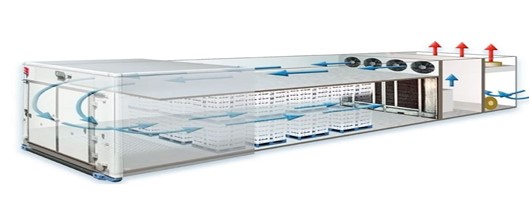
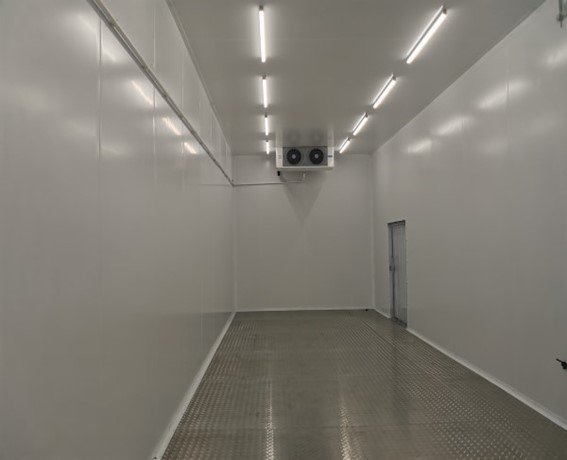
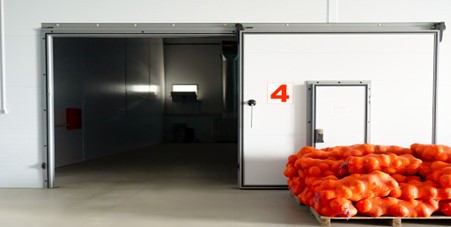
Refrigeration Chambers What they are: Refrigeration chambers are specialized rooms designed for storing products at low temperatures. They are used in the food industry, warehouses, and logistics for storing fresh and frozen goods such as meat, fish, dairy products, fruits, and vegetables.
What they do: Refrigeration chambers do not produce products but provide: • Long-term storage of fresh and frozen products. • Optimal conditions for preserving the quality, taste, and nutritional value of food.
How they work:
Temperature control: Refrigeration chambers maintain a set temperature, usually from 0°C to –18°C depending on the stored products, using refrigeration units and control systems.
Ventilation: Ventilation systems ensure even distribution of cold air, preventing hot spots and condensation.
Condition monitoring: Modern chambers are equipped with monitoring systems that track temperature and humidity. Alerts activate when necessary to prevent food spoilage.
Packaging and placement: Products are placed in airtight packaging before storage, which helps preserve freshness.
Advantages of refrigeration chambers: • Quality preservation: They ensure long-term storage without quality loss. • Extended shelf life: Products can be stored for months or even years. • Logistics convenience: They enable efficient storage and distribution systems.
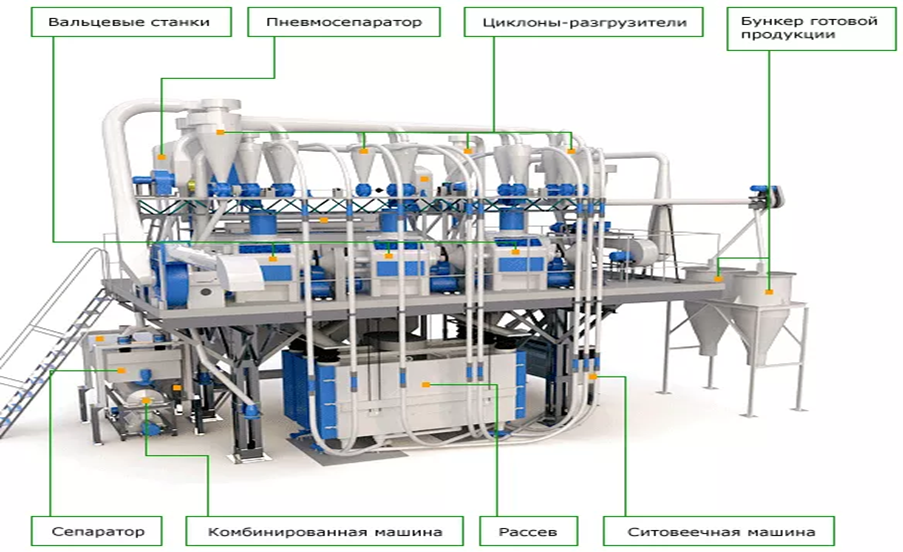
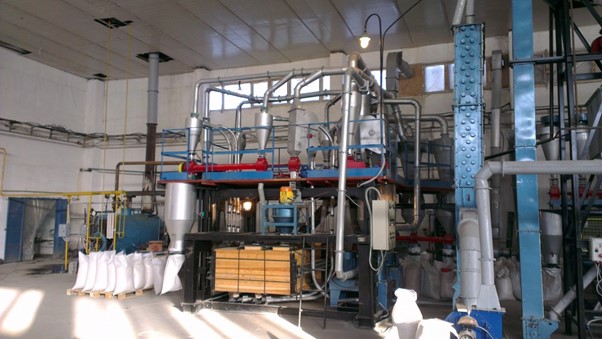
Grain Mills What it is: Grain mills are specialized installations designed to process cereal crops into flour and other products. They can range from small household mills to large industrial units capable of handling large volumes of grain.
What they can produce: • Flour: various types, including wheat, rye, corn, and others. • Groats: for example, buckwheat or oatmeal. • Bran: a by-product that can be used for animal feed or in bakery production. • Finely ground products: such as flour for specialized diets or recipes.
How it works:
Grain loading: o Grain is fed into the mill from a pre-cleaned and prepared batch. Cleaning includes removing impurities, stones, and other contaminants.
Grinding: o Depending on the type of mill, the grain passes through various mechanisms such as millstones or hammer systems. o Millstones can be flat or conical and provide a more uniform grind. o Hammer mills use hammers to break the grain into small particles. o The grinding process can be multi-stage: first coarse grinding, then finer grinding, producing flour of the required fineness.
Sorting: o After grinding, the finished product passes through sorting machines that separate flour by type and quality. This ensures a uniform product and removes any large particles.
Packaging: o Finished flour and other products are packaged in bags, containers, or other packaging for storage and transport. Packaging can be automated using packing machines.
Advantages of using grain mills: • Flour quality: Modern mills ensure high-quality products while preserving nutrients. • Product variety: Mills can produce different types of flour and groats to meet various market needs. • Efficiency: Automation significantly increases production volumes and reduces costs.
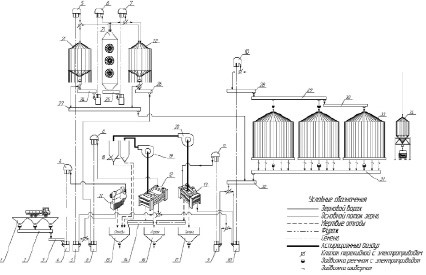
Grain and Rice Processing Equipment What it is: Grain and rice processing equipment includes various machines and lines designed for cleaning, processing, milling, and packaging cereal crops. These installations transform raw materials into finished products such as flour, groats, and rice.
What it can produce: • Flour: various types of flour (wheat, rye, corn, etc.) for bakery and confectionery industries. • Groats: different types of groats (buckwheat, rice, oatmeal, etc.) for culinary use. • Rice: processed and packaged rice ready for sale. • By-products: bran, seeds, and other products that can be used for animal feed or as ingredients in other products.
How it works:
Cleaning: o Initially, grain and rice pass through cleaning machines that remove impurities such as stones, dust, and other contaminants. Vibrating sieve machines and magnetic separators are commonly used.
Drying: o To prevent spoilage, grain and rice may be dried using special drying installations that control temperature and humidity.
Milling: o After cleaning and drying, grain is fed into mills for grinding. Millstones or hammer mills are used to produce flour or groats of the desired consistency.
Sorting: o After milling, the finished products pass through sorting machines that separate products by size and quality. This ensures a uniform product.
Packaging: o Finished products are packaged using automatic packing machines. Packaging may include bags, boxes, or containers depending on the product type and market requirements.
Advantages of grain and rice processing: • Extended shelf life: processed products have a longer storage period. • Convenience: products become easier to store and transport. • Product variety: the processing allows the production of various types of flour and groats to meet consumer needs.
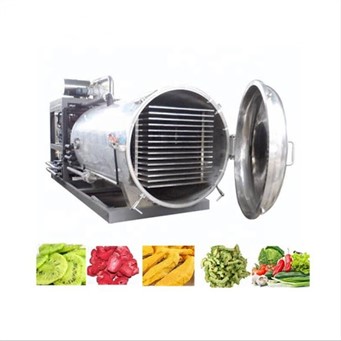
Vegetable and Fruit Drying Equipment What it is: Freeze-drying equipment is designed to remove moisture from fruits and vegetables using a process called sublimation. This method transforms ice directly into vapor without passing through the liquid phase, preserving the original nutrients, flavor, aroma, and texture of the products. Freeze-drying is highly valued in the food industry because it allows long-term preservation without the need for preservatives.
What it can produce: • Freeze-dried fruits: apples, strawberries, bananas, mangoes, and many others. • Freeze-dried vegetables: carrots, broccoli, spinach, peppers. • Mixes for breakfasts, soups, and snacks that can be added to dishes to enhance nutritional value. • Lightweight, easy-to-store freeze-dried products ideal for travelers and active lifestyles.
How it works:
Pre-processing: o Fruits and vegetables are washed, peeled, and deseeded, then cut into small pieces or slices for even freezing. o In some cases, products may be blanched to preserve color and texture.
Freezing: o Prepared products are placed in a freezing chamber, where they are rapidly frozen below 0°C to prevent the formation of large ice crystals that can damage cell structure.
Sublimation: o Frozen products are placed in a vacuum chamber where low pressure is created. o The temperature is gradually increased, allowing the ice to turn into vapor without passing through the liquid phase. Precise control of temperature and pressure is required to achieve optimal results. o During sublimation, 90-95% of moisture is removed, producing lightweight, long-lasting products.
Packaging: o After sublimation, the finished products are packed in airtight packaging to prevent moisture and maintain freshness for a long time. o Packaging can include vacuum bags, containers, or other methods ensuring long-term storage.
Advantages of freeze-drying: • Nutrient preservation: Freeze-drying helps retain vitamins and minerals that can be lost during traditional drying. • Storage convenience: Freeze-dried products are lightweight and compact, ideal for long-term storage and transportation. • Long shelf life: Without moisture, products can last for years without refrigeration. • Easy preparation: Freeze-dried products can be quickly rehydrated by adding water, making them convenient for cooking.
Agricultural Product Packaging Equipment What it is: Agricultural product packaging equipment includes various machines and lines designed to automate the packaging process of fresh, processed, or manufactured products. This equipment protects products from damage and contamination and extends their shelf life.
What it can produce: • Packaged fresh products: vegetables, fruits, greens. • Processed products: canned, frozen, or freeze-dried products. • Semi-finished products: meat and fish products, dumplings, baked goods, and others. • Dry products: groats, flour, seeds.
How it works:
Product preparation: Products undergo pre-processing, including washing and sorting, to remove dirt and damaged items.
Packaging: Machines can use various types of packaging, including film, boxes, bags, and containers. Different packaging technologies are used depending on the product type, such as vacuum packing, shrink wrapping, or flexographic printing.
Filling: Packaging machines automatically fill containers or bags with products. This process can be adjusted for different volumes and packaging formats.
Sealing and closing: After filling, the packaging is closed and sealed to ensure airtightness and protection from external factors. This can be done using adhesive devices or heat sealing.
Labeling and marking: Packaged products can be labeled with information about ingredients, expiration dates, and other characteristics.
Quality control: At the end of the line, quality control is conducted to ensure that packaging is proper and products meet standards.
Advantages of agricultural product packaging: • Product protection: Packaging protects products from mechanical damage and contamination. • Extended shelf life: Proper packaging helps preserve freshness and nutrients. • Consumer convenience: Packaged products are easier to transport and store. • Informative: Labels provide consumers with important product information.
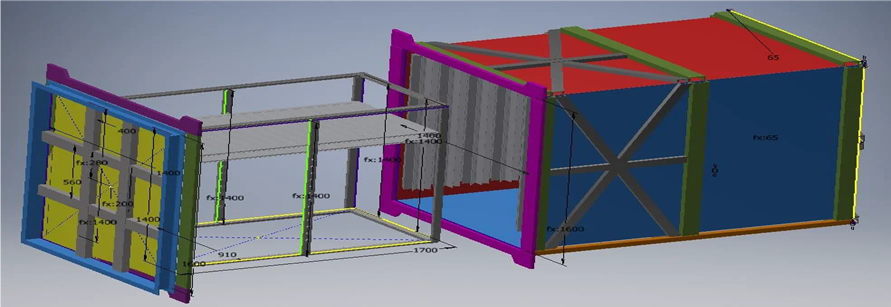
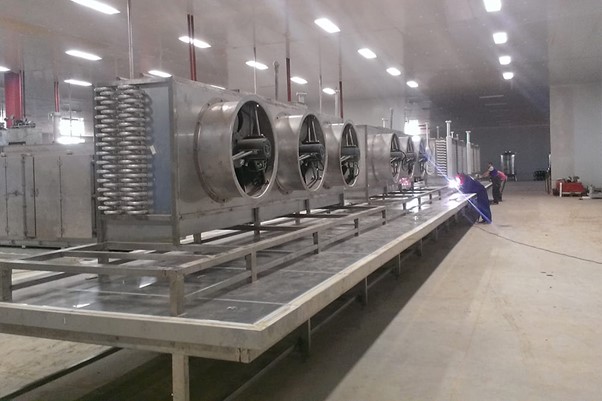
Blast Freezing Equipment for Agricultural Products Description: Blast freezing is a technology that rapidly freezes products, minimizing the formation of large ice crystals and preserving texture and flavor.
What it is: Blast freezing equipment is designed for fast and efficient freezing of fresh agricultural products such as fruits, vegetables, meat, and fish. This process helps retain nutrients, texture, and flavor while preventing cell wall damage caused by large ice crystals.
What it can produce: • Agricultural products: Blast freezing preserves freshness and nutrients in various products: o Fruits: strawberries, raspberries, blueberries, apples, and others. o Vegetables: broccoli, carrots, spinach, cauliflower. o Meat and fish: beef, chicken, fish, seafood. • Semi-finished products: Frozen semi-finished items such as dumplings, pies, and other ready-to-eat meals.
How it works:
Product preparation: o Products are washed, cleaned, and cut as needed. Some items may require blanching to preserve color and texture.
Loading into blast freezer: o Prepared products are placed in specialized blast freezing chambers, which can be tunnel or cabinet systems.
Blast freezing process: o Chambers maintain very low temperatures (usually between -30°C and -50°C), rapidly freezing the products. Cold air circulates around the products, quickly lowering their temperature. o Rapid freezing prevents the formation of large ice crystals, preserving structure and nutrients.
Storage: o After blast freezing, products are moved to cold storage chambers for long-term storage at stable temperatures to prevent thawing and quality loss.
Packaging: o Finished frozen products are packed in airtight packaging, such as vacuum bags or containers, to prevent moisture and maintain freshness.
Advantages of blast freezing: • Nutrient preservation: Vitamins and minerals that may be lost during conventional freezing are retained. • Texture and flavor retention: Rapid freezing prevents cell damage, maintaining original texture and flavor. • Extended shelf life: Frozen products can be stored for long periods without quality loss, making them convenient for use at any time. • Production flexibility: Blast freezing allows manufacturers to quickly process large volumes, which is especially important during harvest season.
Freeze-drying equipment is designed to remove moisture from fruits and vegetables using a sublimation process in which ice turns into steam, skipping the liquid phase. This method helps preserve the nutrients, flavor, aroma and texture of the food, and allows for long-term storage without preservatives.
The process begins with preparing the food: it is washed, peeled and cut. In some cases, fruits and vegetables are blanched to preserve color and texture. The food is then frozen in special chambers, after which it is placed in a vacuum chamber. Here, low pressure is created and the temperature gradually increases, which allows the ice to turn into steam. This process removes 90-95% of the moisture, leaving the food light and durable. Finished freeze-dried food is packed in airtight containers to protect it from moisture.
The benefits of freeze-drying include preserving nutrients, easy storage and transportation, a long shelf life without refrigeration and ease of preparation – just add water to reconstitute the food
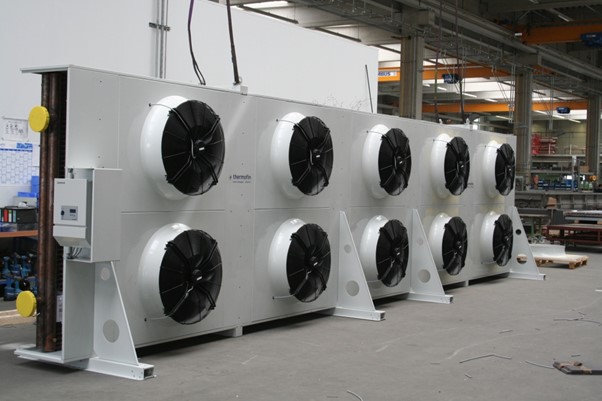
Refrigeration Units What it is: Refrigeration units are devices designed to create and maintain low temperatures in cooling systems. They are widely used in various industries, including food processing, medicine, commerce, and climate control.
What it can produce: • Cold: The primary function of refrigeration units is to produce cold for cooling or freezing products and maintaining the desired temperature in refrigeration systems. • Temperature conditions: Providing optimal conditions for storing and transporting products, as well as for climate control systems.
How it works:
Compression: The refrigeration unit uses a compressor to compress the refrigerant, increasing its temperature and pressure.
Condensation: The compressed refrigerant passes through a condenser, releasing heat to the environment and condensing into a liquid.
Expansion: The liquid refrigerant then passes through an expansion valve, where its pressure drops sharply, causing it to evaporate and cool.
Evaporation: The cooled refrigerant passes through an evaporator, absorbing heat from the surrounding environment (e.g., a refrigeration chamber), causing it to evaporate and produce cold.
Cycle repeats: The process repeats continuously, ensuring constant cooling.
Advantages of refrigeration units: • Energy efficiency: Modern units are designed with energy savings in mind, reducing operating costs. • Reliability: They provide stable operation of refrigeration systems, which is critical for product storage. • Versatility: Used in various fields, from household refrigeration equipment to industrial systems.
Refrigeration units play a key role in ensuring quality storage of products, maintaining necessary temperature conditions across different sectors, making them indispensable in many industries.
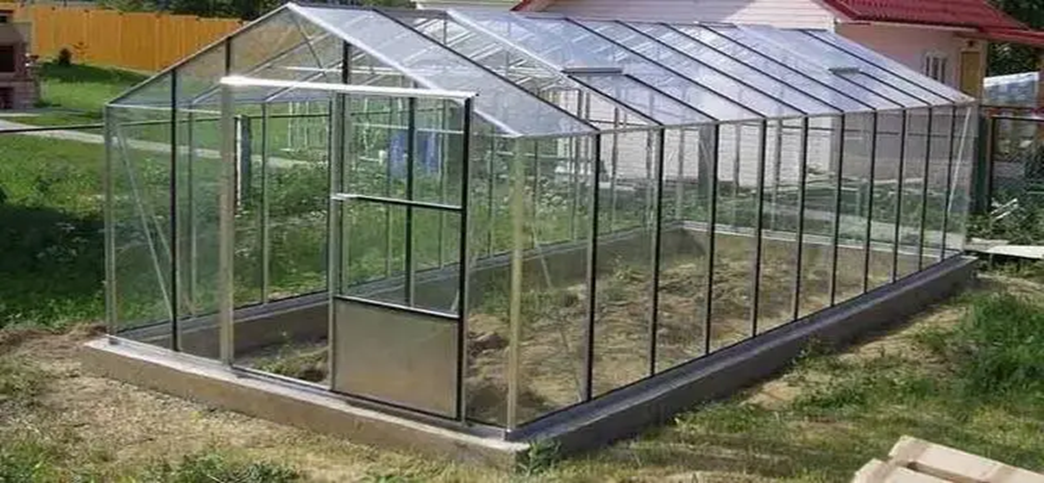
Glass Greenhouses What it is: Glass greenhouses are structures covered with glass, designed for growing plants in controlled conditions. They provide maximum sunlight and allow maintaining optimal conditions for plant growth while protecting them from adverse weather.
What it can produce: • Vegetables: such as tomatoes, cucumbers, peppers, and other crops. • Fruits: berries, melons, citrus, and other heat-loving plants. • Flowers: various flower crops, including roses, lilies, and chrysanthemums. • Green crops: greens, salads, and aromatic herbs.
How it works:
Creating a microclimate: Glass greenhouses allow maximum sunlight to enter, promoting effective photosynthesis. The glass also retains heat, creating favorable conditions for plant growth.
Temperature regulation: Ventilation systems, including automatic windows and fans, control temperature and humidity inside the greenhouse, maintaining optimal conditions for different crops.
Irrigation and fertilization: Drip irrigation and automated fertilization systems provide plants with necessary nutrients and water.
Pest protection: Glass greenhouses protect plants from external factors such as insects and diseases due to their sealed structure.
Advantages of glass greenhouses: • Durability: Glass provides high strength and long lifespan, making the greenhouse more resistant to external impacts. • Optimal lighting: Glass allows more light than plastic films, supporting more efficient plant growth. • Energy efficiency: Modern glass greenhouses can be equipped with heating and cooling systems for effective microclimate management. • Aesthetic appeal: Glass greenhouses have a more attractive appearance and can be used in landscape design.
Glass greenhouses are an excellent solution for those who want to provide their plants with maximum sunlight and reliable protection from external factors, ensuring durability and efficiency in the growing process.
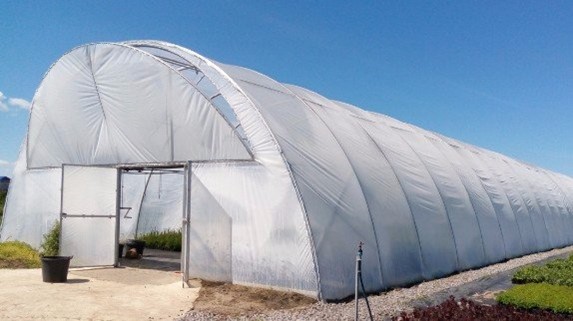
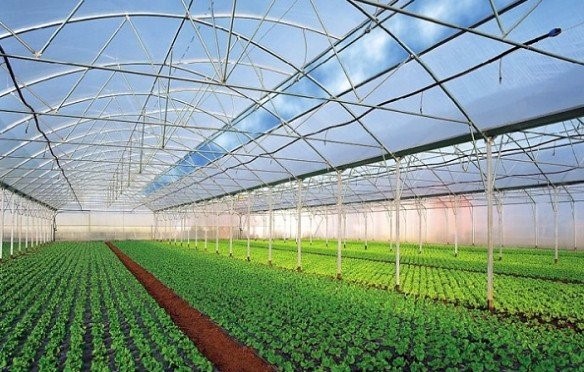
Plastic Film Greenhouses What it is: Plastic film greenhouses are specialized structures covered with a film, designed for growing plants in controlled conditions. They provide protection from adverse weather, pests, and diseases, creating an optimal environment for plant growth. These greenhouses allow maintaining the necessary climate conditions for various crops.
What it can produce: • Vegetables: such as tomatoes, cucumbers, peppers, and other crops. • Fruits: strawberries, melons, and other heat-loving plants. • Flowers: various flower crops, such as roses and asters. • Green crops: greens, salads, and aromatic herbs.
How it works:
Creating a microclimate: Plastic film greenhouses retain heat and create a humid environment, promoting rapid plant growth. The film allows sunlight to pass through, necessary for photosynthesis.
Temperature regulation: Temperature inside the greenhouse can be controlled using ventilation windows, heaters, and cooling systems, maintaining optimal conditions for plant growth.
Irrigation and fertilization: Drip irrigation and automated fertilization systems supply plants with the necessary nutrients and water.
Pest protection: Plastic film greenhouses create a barrier between the external environment and plants, protecting them from insects and diseases.
Advantages of plastic film greenhouses: • Efficiency: Creating optimal conditions for growth significantly increases yield. • Resource savings: Climate control reduces the need for pesticides and fertilizers, making the process more environmentally friendly. • Affordability: Plastic film greenhouses are cheaper than glass counterparts, making them accessible to farmers and gardeners. • Flexibility: Easy to install and move, adaptable to various conditions.
Plastic film greenhouses are an effective solution for growing a wide range of agricultural crops, providing cost-efficiency and high-level control over growing conditions.
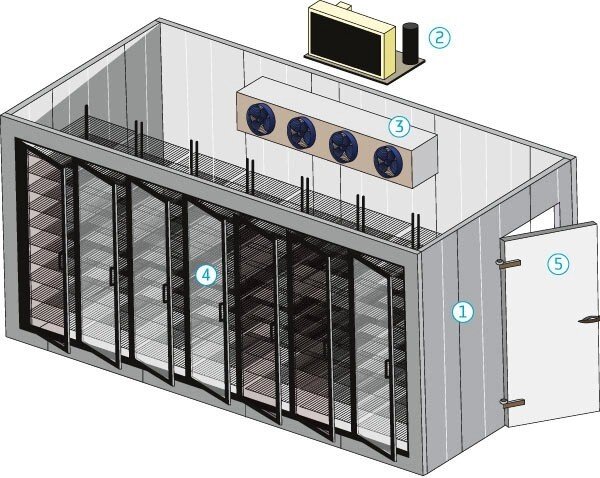
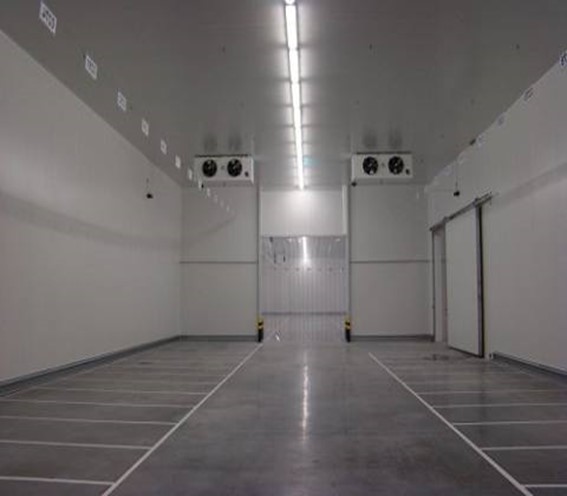
Cold Storage Rooms What it is: Cold storage rooms are specially equipped spaces designed for storing various goods at controlled low temperatures. These rooms can vary in size and construction, ranging from small units for restaurants to large warehouse chambers for distribution centers.
Key Features:
Temperature control: o Cold storage rooms can maintain different temperature ranges depending on the type of products stored. For example, meat and dairy products require temperatures between 0°C and +4°C, while frozen goods need temperatures below -18°C.
Insulation: o The walls and doors of cold storage rooms are often insulated with special materials to minimize heat loss and maintain stable temperatures.
Monitoring systems: o Modern cold storage rooms are equipped with automated systems to monitor temperature and humidity in real time, ensuring optimal storage conditions.
Applications: Cold storage rooms are widely used across industries: • Food industry: Storing fresh and frozen products (meat, fish, dairy, fruits, and vegetables) to prevent spoilage and preserve nutritional quality. • Pharmaceuticals: Storing medicines and vaccines requiring strict temperature control, e.g., some vaccines need storage between +2°C and +8°C. • Logistics and transportation: Storing and transporting goods such as seafood and perishable products over long distances.
How they work:
Compressor: o Compresses the refrigerant, increasing its pressure and temperature, enabling circulation through the system.
Condenser: o The refrigerant passes through the condenser, releasing heat into the environment and condensing into a liquid.
Evaporator: o The liquid refrigerant enters the evaporator, evaporates, and absorbs heat from the room, creating cold that keeps products fresh.
Temperature regulation: o Thermoregulation systems maintain the desired conditions by automatically turning the compressor on and off depending on the room temperature.
Additional Aspects: • Energy efficiency: Modern cold storage rooms incorporate energy-saving technologies, reducing electricity consumption and environmental impact. • Safety: Regular maintenance prevents breakdowns and refrigerant leaks and ensures compliance with hygiene standards.
Conclusion: Cold storage rooms are essential for quality storage and transportation of food, pharmaceuticals, and other goods requiring special storage conditions. Advances in refrigeration technology help improve storage quality and minimize losses.
Our services
SUPPLIER SEARCH AND VERIFICATION IN CHINA
Equipment search through partner databases, by countries worldwide, and among industry leaders.
BEST PRICES FOR EQUIPMENT FROM CHINA
Our local representatives will get you the best prices directly from manufacturers.
COUNTERPARTY VERIFICATION IN CHINA
Verification of the company’s registration date, licenses, litigation history, and actual address.
DELIVERY TERMS FROM CHINA
We will deliver your order on the most favorable logistics terms for you (air, rail, or truck).
CONTRACTING
Preparation of export-import contracts:
Customs clearance procedures in China and customs clearance in Uzbekistan.
QUALITY CONTROL
Our local representatives control the entire production process of equipment and goods.
LOGISTICS
Supervision of the loading process, providing photo and video reports.
INSTALLATION
Commissioning works and staff training in Uzbekistan.
Our additional services
The main goal of the company Grande is to organize mutually beneficial cooperation between entrepreneurs and companies from around the world and China.
The company “Grande” offers an unlimited selection of high-quality, high-tech equipment, machines, installations, and technical tools from leading Chinese manufacturers on a turnkey basis and provides recommendations to its clients on all matters related to purchasing equipment and goods.
We will assist you in selecting agricultural equipment and machinery for growing, harvesting, sorting, and processing fruit and vegetable crops, as well as other types of agricultural production.
Supply of high-quality equipment and belts for food production. Familiarize yourself with the list of main types of machines used in the food industry.
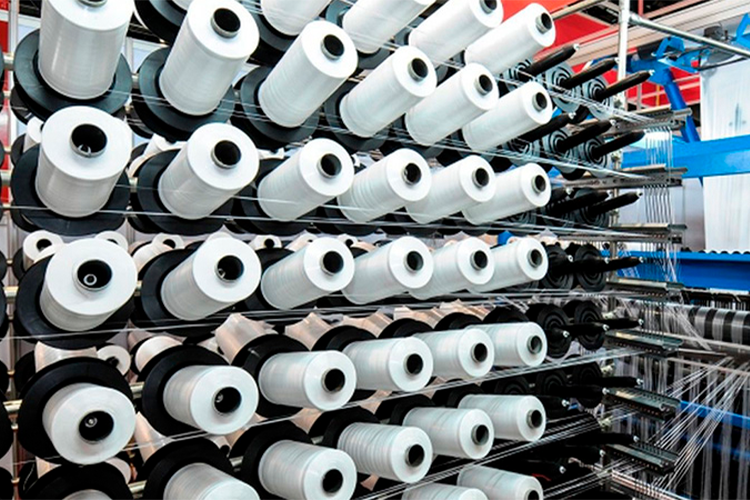
Comprehensive solutions for the light industry from China at affordable prices. Equipment for raw cotton processing, textile printers, weaving machines, textile dyeing equipment, and more.
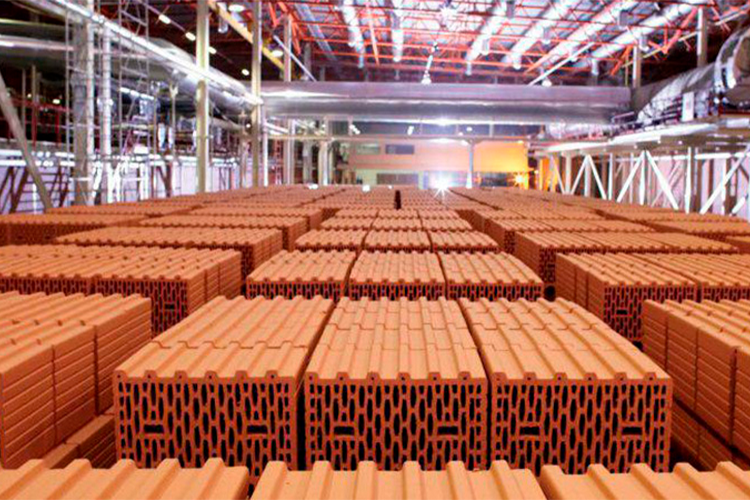
We offer a wide range of equipment for the production of construction materials. With us, you’ll find machinery for manufacturing paints and varnishes, equipment for producing ceramic materials and products, as well as other types of equipment at the best prices.
Specialized machinery for use in the mining industry, including rock crushing equipment, mineral exploration tools, equipment for extracting mining and chemical raw materials, and other machinery from Chinese manufacturers at the best prices.
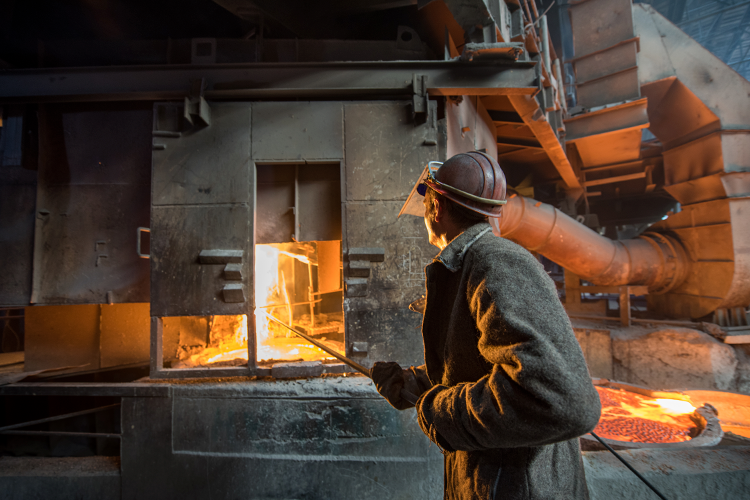
We offer innovative equipment for extracting metals from ores or other types of raw materials, as well as technology related to altering the chemical composition, structure, and properties of metal alloys, and the production of various metal products from them.
Our company has extensive experience in direct cooperation with Chinese companies. Grande specialists help businesses daily to purchase high-quality products from trusted Chinese suppliers. Moreover, Grande will assist you with all documentation and ensure the delivery of your goods to your warehouse or facility.
0+
Direct partner manufacturers of the company
0+
Years of experience working with Chinese companies