Equipment from China for building materials production

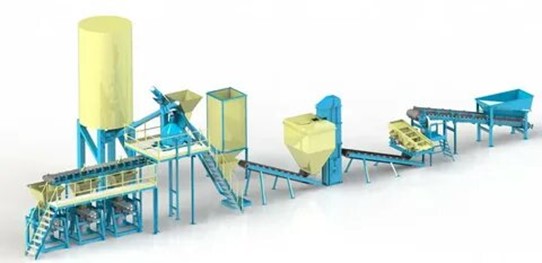
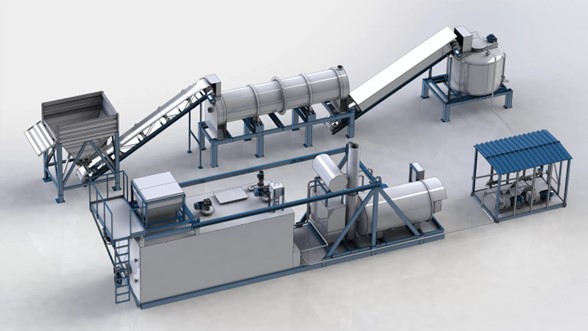
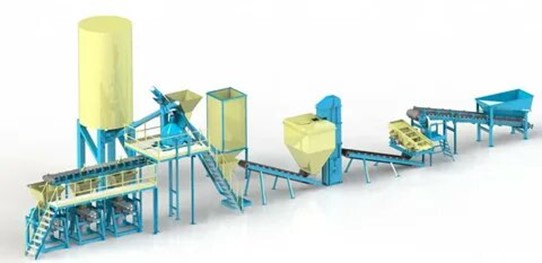
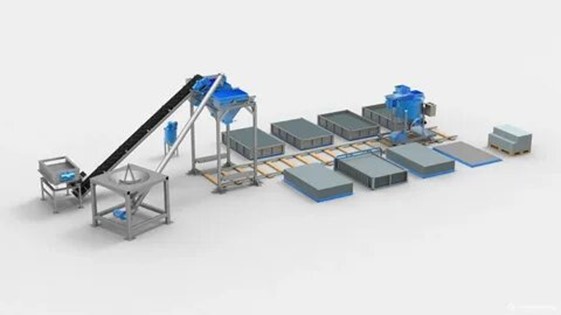
We offer the latest models of popular equipment and machinery for building materials production. Our competitive prices and transparent terms are complemented by fast delivery.


Contact us and get a free consultation.

We cooperate with the best manufacturers

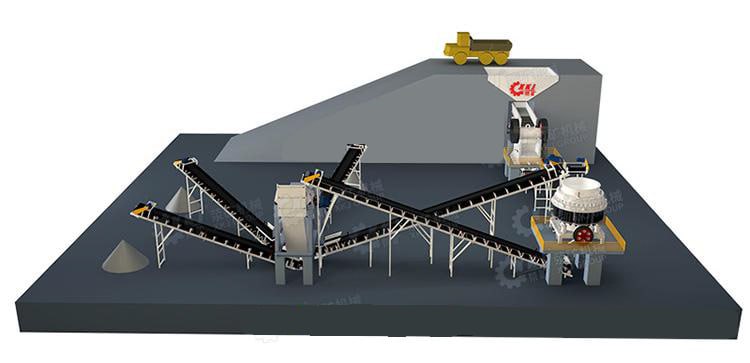
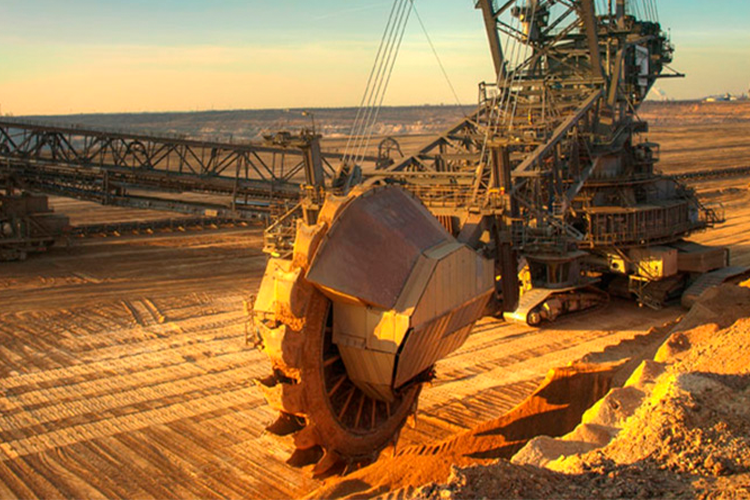
Crushing of Mineral Ore

Crushing mineral ore is a critical stage in the processing chain aimed at reducing the size of rocks and extracting valuable minerals for subsequent beneficiation. This process efficiently prepares the ore for further processing stages such as flotation, magnetic separation, or chemical treatment.

Stages of Ore Crushing

  1. Primary Crushing
    In the initial stage, large pieces of run-of-mine ore are crushed into smaller fragments. The following machines are used for this:

    • Jaw Crushers — use two large plates to compress the ore, breaking it into smaller pieces.

    • Gyratory Crushers — crush the ore using a rotating mantle that gyrates within a concave bowl.

    • Impact Crushers/Hammer Mills — use hammers or blow bars to break the material by impact.
      The goal of this stage is to reduce the size of ore pieces to several tens of centimeters, preparing the material for secondary processing.

  2. Secondary and Tertiary Crushing
    In these stages, the ore size is reduced to several millimeters. The following equipment is used:

    • Cone Crushers — are used for further reduction of ore fraction after primary crushing.

    • Impact Crushers — effectively handle the crushing of ore to smaller sizes.
      These stages prepare the ore for fine processing and the extraction of valuable components.

  3. Fine (Grinding)
    At the final stage, the ore is crushed (ground) to sizes suitable for subsequent beneficiation processes such as flotation or chemical treatment. The following are commonly used:

    • Ball Mills — are used for additional ore grinding, turning it into a powder form using steel balls as the grinding medium.

    • Rod Mills — use long steel rods for grinding, suitable for coarse grinding.

    • Vertical Roller Mills / High-Pressure Grinding Rolls (HPGR) — modern, energy-efficient equipment for fine crushing and grinding.

Types of Crushers

  • Jaw Crushers — operate on the principle of compressing ore between two flat plates (jaws), effectively breaking large lumps.

  • Cone Crushers — operate on the principle of a rotating mantle gyrating within a stationary concave, crushing the ore by compression.

  • Gyratory Crushers — similar to jaw crushers but for higher capacities; consist of a concave surface and a conical head.

  • Impact Crushers (Horizontal Shaft Impactors – HSI / Vertical Shaft Impactors – VSI) — use impact force for crushing; suitable for less abrasive materials.

  • Hammer Mills — use swinging or fixed hammers on a rotating shaft to shatter material by impact.

  • Roll Crushers — compress material between two rotating rollers.

Auxiliary Processes
To improve crushing efficiency, the following are often used:

  • Screening/Classification — processes for separating larger and smaller particles using vibrating screens or classifiers (hydrocyclones). This ensures that only properly sized material proceeds to the next crushing stage or to beneficiation (closed-circuit crushing).

  • Conveying — transport of crushed material between crushing stages and to storage areas using belt conveyors.

Purpose of Crushing
The main goal of ore crushing is to prepare the material for subsequent processes, such as:

  • Liberation of Valuable Minerals: Breaking down the rock to free the valuable mineral grains from the waste rock (gangue).

  • Particle Size Optimization: Achieving a specific particle size range required for efficient operation of downstream beneficiation processes.

    • Flotation — for separating valuable minerals from gangue.

    • Magnetic Separation — for extracting iron-bearing minerals.

    • Gravity Separation — for separating minerals based on density differences.

    • Leaching (Chemical Treatment) — for extracting valuable metals such as gold, copper, or uranium.

The process of crushing mineral ore is essential for the efficient extraction of valuable components from raw material, forming the foundation for further processing and the production of high-quality metal concentrates.

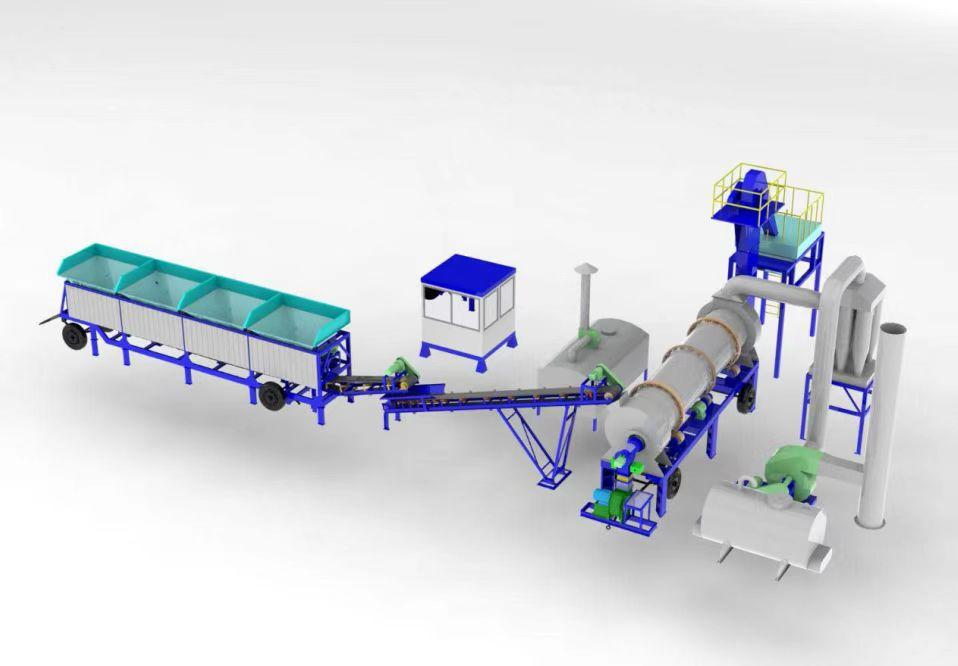
Asphalt Concrete Mix Production Technology

Asphalt concrete is a construction material composed of a mixture of bitumen, aggregates (crushed stone, sand, etc.), mineral filler, and additives, used for constructing road pavements, sidewalks, and other structures. During its production, it is crucial to consider the mix composition, technological specifics, and climatic conditions.

Types of Asphalt Concrete Mixes by Composition

  1. Coarse-Graded Asphalt Concrete

    • Application: Used for the lower layers of road pavements.

    • Composition: Coarse (20-40 mm) and fine (5-15 mm) crushed stone fractions.

  2. Fine-Graded Asphalt Concrete

    • Application: Used for the upper wearing course of road pavements.

    • Composition: Fine-grained crushed stone (5-15 mm).

  3. Sand Asphalt Concrete

    • Application: Used for sidewalks, pedestrian areas, and low-traffic areas.

    • Composition: The main aggregate is sand, supplemented with fine crushed stone and mineral filler.

Types of Asphalt Concrete by Production Technology
Asphalt concrete mixes are divided into three main types based on laying temperature and production process:

  1. Hot Mix Asphalt (HMA)

    • Laying Temperature: Not below +110°C.

    • Production Process: Mixed and laid at high temperatures (typically 150-180°C). The aggregate is dried and heated before mixing with hot bitumen.

    • Characteristics: Produces a durable, high-strength pavement. Standard for high-traffic roads.

  2. Warm Mix Asphalt (WMA)

    • Laying Temperature: +100°C to +140°C.

    • Production Process: Uses technologies (e.g., organic additives, chemical packages, foaming) that reduce bitumen viscosity, allowing mixing and compaction at lower temperatures than HMA.

    • Advantages: Reduced energy consumption, lower greenhouse gas and fume emissions, improved working conditions, and potential for longer haul distances.

  3. Cold Mix Asphalt (CMA)

    • Laying Temperature: Can be placed at ambient temperatures, even down to -30°C for some types.

    • Production Process: Produced using emulsified or cutback (fluidified) bitumen, sometimes with special additives. No heating of aggregates is required, or it is minimal.

    • Advantages: Can be stockpiled, used for patching and repairs in cold/wet weather, lower energy costs. Ideal for temporary repairs, low-traffic roads, and bases.

Hot Mix Asphalt (HMA) Production Process

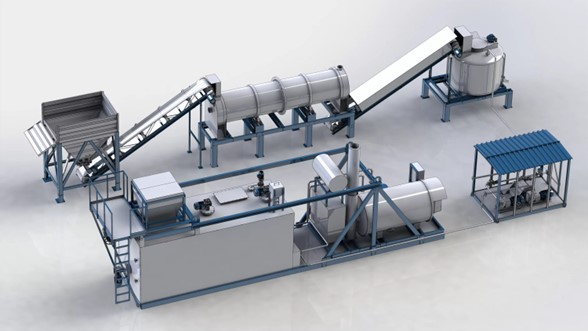
  1. Aggregate Drying and Heating

    • Aggregates (crushed stone, sand) are dried and heated to high temperatures (typically 150-180°C) in a rotary dryer drum to remove moisture. Moisture prevents proper coating with bitumen and reduces mix quality.

  2. Mixing of Components

    • The heated aggregates are precisely proportioned and fed into a mixer (pugmill). Heated bitumen (and mineral filler) is added. Intense mixing ensures each aggregate particle is fully coated with a thin film of bitumen, creating a homogeneous mixture.

  3. Storage and Transportation

    • The finished hot mix can be temporarily stored in hot storage silos equipped with heating systems to prevent heat loss and hardening before transportation to the construction site.

Advantages and Features of Cold Mix Asphalt (CMA)

  • Application in Cold Conditions: Allows placement at low and even negative temperatures.

  • Production Process: Uses emulsified bitumen (bitumen droplets suspended in water with an emulsifier) or cutback bitumen (bitumen thinned with a solvent). Special polymer additives can improve performance.

  • Applications: Primarily used for pothole patching, emergency repairs, maintenance of low-volume roads, and as a base or binder course where traffic is light. It gains strength slowly as water evaporates or the solvent volatilizes.

Conclusion
Asphalt concrete production technology takes into account climatic and operational conditions, allowing for its effective use in various construction and road works. Depending on the type of asphalt concrete, an appropriate production method is chosen, which directly affects its performance characteristics, durability, and area of application.

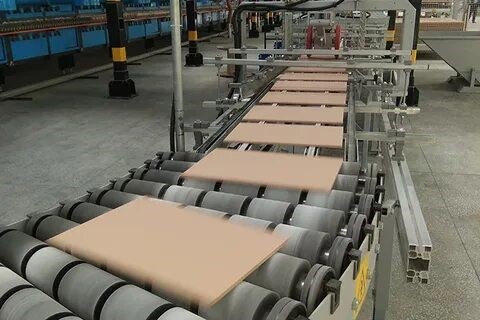
Production Lines for Tile Manufacturing

Production lines for manufacturing tiles, whether ceramic, porcelain stoneware, or other types, involve several key stages. Each stage requires specialized equipment to ensure a high-quality product. Let’s examine the main stages of tile production.

1. Raw Material Preparation
At this stage, clays, quartz sand, kaolin, feldspar, and other additives that form the tile body are prepared.

  • Equipment:

    • Raw Material Mills (Ball mills, vibration mills, continuous mills): For grinding and mixing components to the required degree of homogeneity.

    • Mixers: For the uniform distribution of components and achieving the necessary consistency of the slip (wet process) or powder (dry process).

    • Spray Dryers (for the dry pressing method): To atomize the liquid slip into a fine, free-flowing granulated powder with controlled moisture content.

    • Raw Material Dryers: To prevent excessive moisture in materials before the pressing process.

2. Tile Forming (Shaping)
After preparation, the tile body is formed into the desired shape and size using various methods.

  • Equipment:

    • Pressing Machines (Hydraulic presses): Press the tile powder (in dry pressing) or plastic body to achieve high density and precise dimensions.

      • Toggle Presses: Common for standard ceramic tiles.

      • Hydraulic presses with large tonnage: Used for large-format porcelain stoneware.

    • Extruders: For creating tiles via the extrusion method, which is suitable for mass production of specific shapes (e.g., roofing tiles, some clinker).

    • Casting Lines: Used for tiles made by slip casting (pouring liquid slip into molds), allowing for more complex shapes and textures. Common for sanitaryware.

3. Tile Drying
After forming, the tile needs to be dried to remove mechanical water and prevent cracking or explosions during subsequent firing.

  • Equipment:

    • Conveyor Dryers: For uniform drying of tiles with controlled temperature and humidity (often using hot air).

    • Drying Chambers: Convective or infrared, providing efficient moisture removal.

    • Drying Tunnels: Large systems with controlled heating and ventilation for large-scale production.

4. Tile Firing (Biscuit/Single Firing, Glost Firing)
Firing is the most critical stage, where the tile acquires its final strength, durability, and vitrification. The firing temperature depends on the tile type and typically ranges from 800°C to 1250°C.

  • Equipment:

    • Roller Hearth Kilns (Tunnel Kilns): The most common modern type. Tiles pass on rollers through several temperature zones, ensuring uniform firing. Can operate on gas or electricity.

    • Rotary Kilns (for special products): Provide continuous firing in rotating drums for uniform heating (less common for standard tiles).

    • Shuttle Kilns (Periodic Kilns): Used for smaller batches, special decorations, or artisanal production.

    • Glazing and Decorating Lines: After the first (biscuit) firing, glaze and decorative patterns are applied using:

      • Glazing machines (bell, curtain, disc, digital printers).

      • Engobing machines for applying an engobe layer.

      • Digital inkjet printers for high-resolution decoration.

5. Glaze Firing (if applicable)
After decoration, the tiles undergo a second firing to melt (mature) the glaze and fix the decorations.

  • Equipment: The same roller hearth kilns or specialized glost kilns, but usually at a slightly lower temperature than the biscuit firing.

6. Tile Cooling
After firing, the tile must be cooled in a controlled manner to a safe temperature to prevent thermal shock and damage (crazing).

  • Equipment:

    • Cooling Zones of the Kiln: Integrated cooling sections (forced air cooling) at the end of the roller hearth kiln.

    • Special Cooling Tunnels: For additional controlled cooling if needed.

7. Quality Control and Sorting
At this stage, tiles are inspected for defects, deviations from standards, and mechanical properties.

  • Equipment:

    • Automatic Quality Control Systems (Vision systems, laser scanners): For detecting defects such as cracks, chips, size variations, warpage, or color deviations.

    • Strength Testers (Laboratory equipment): Machines for checking flexural strength, abrasion resistance, frost resistance, etc.

    • Automatic Sorting and Grading Lines: To sort tiles by grade, size, and color shade.

8. Packaging and Palletizing
At the final stage, tiles are packaged for storage and shipment.

  • Equipment:

    • Automatic Packaging Machines: For packaging tiles into cardboard boxes, shrink film, or corner-protected bundles.

    • Automatic Palletizers/Robotic Palletizing Cells: For stacking boxes or tile bundles onto pallets according to a pre-set pattern, facilitating transportation.

    • Stretch Wrapping Machines: To secure the load on the pallet.

Conclusion
Tile manufacturing production lines encompass several crucial stages: from raw material preparation to packaging the finished product. The use of specialized equipment at each stage helps achieve high tile quality, consistency, and efficient, cost-effective production. Modern lines are highly automated, from material dosing and pressing to final sorting and palletizing.

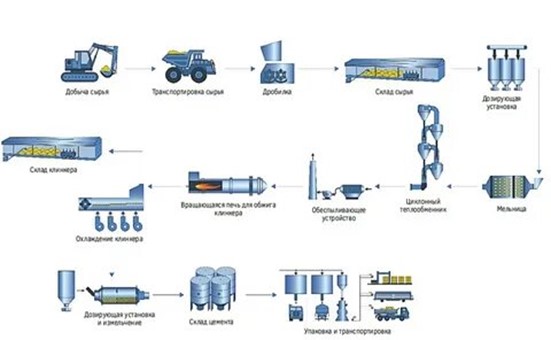
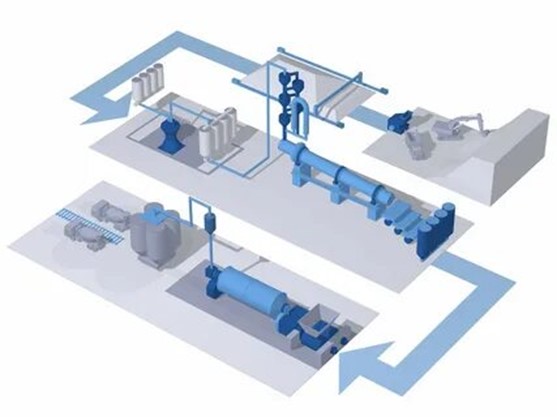
Machines for Cement Production Cement manufacturing production lines include several key stages that require specialized equipment to ensure efficient and high-quality production. Below are the main stages and the equipment used in each.

  1. Crushing and Raw Material Preparation Cement production begins with the extraction and processing of raw materials including limestone, clay, sand, and other additives. These materials must be prepared for further processing. Equipment: • Crushers — used to crush large raw materials.
  • Jaw crushers — for primary crushing.
  • Impact crushers — for secondary crushing and obtaining finer fractions.
  • Cone crushers — for crushing harder materials. • Raw material mills — for further grinding after primary crushing.
  • Ball mills — to grind raw materials into powder used for the cement mix.
  • Vibrating and drum mills — to achieve the required degree of fineness.
  1. Raw Material Mixing After the raw materials are ground, they must be thoroughly mixed to achieve a homogeneous cement composition. Equipment: • Mixers — for uniform mixing of components.
  • Plastic mixers — for liquid or semi-liquid materials.
  • Screw mixers — for dry materials.
  • Mechanical mixers — for intensive mixing with a high degree of homogenization. • Dosing systems — automatic devices for precise dosing of each component.
  1. Kilns for Firing (Clinker Production) The mixed raw meal is fed into a kiln where it is subjected to high temperatures (up to 1450 °C) and transformed into cement clinker, the main ingredient of cement. Equipment: • Tunnel kilns — provide firing at high temperature through several temperature zones.
  • Air heaters (calorifers) — for preheating air before it enters the kiln. • Rotary kilns — a rotating cylinder ensures uniform firing of the raw meal. • Clinker kilns — specialized kilns for clinker production.
  1. Clinker Cooling After firing, the clinker must be cooled to a safe temperature to prevent damage. Equipment: • Clinker coolers — devices for uniform cooling.
  • Horizontal coolers — for cooling large volumes via ventilation systems.
  • Tunnel coolers — for deep and uniform cooling of large batches.
  1. Clinker Grinding and Additive Addition The cooled clinker is ground into powder, which becomes cement. Additives such as gypsum or fly ash are added to control cement properties. Equipment: • Ball mills — for grinding clinker into powder. • Vibrating mills — also used for fine grinding. • Gypsum mills — for adding gypsum and regulating the setting time of cement.
  2. Packaging and Transportation Once the cement is ground and mixed with additives, it is ready for packaging and shipment. Equipment: • Packaging machines — for packing cement into bags (paper or plastic).
  • Automatic packaging machines — fill bags and stack them on pallets. • Centralized bulk material systems — for transferring cement to storage or transport. • Transport conveyors — for moving bagged cement along the production line.

Conclusion The cement production line comprises numerous stages, from raw material crushing to packaging of the finished product. The use of specialized equipment at each stage ensures high-quality cement and efficient production organization.

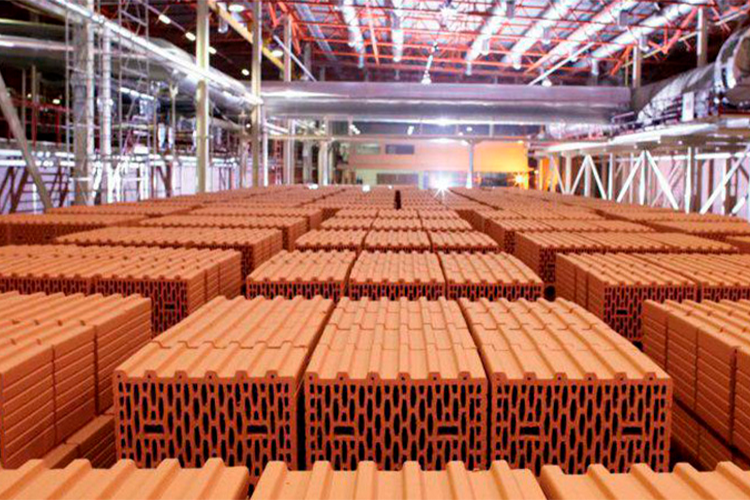
Brick Production Process
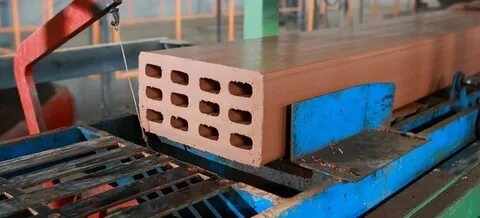
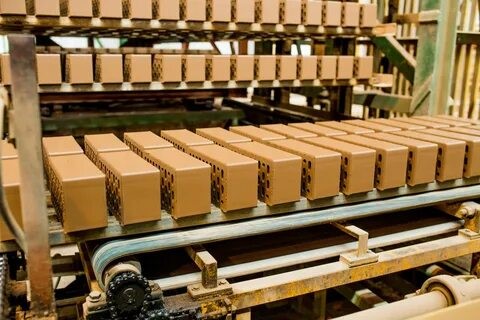
Brick production is a multi-stage process that includes raw material preparation, shaping, drying, firing, and packaging of finished products. Each stage requires specialized equipment to ensure quality and efficient production. Let us consider the process in detail:

  1. Raw Material Preparation
    At this stage, clay—the main raw material for bricks—is processed and prepared.

Processes:
• Extraction and transportation of clay — clay is extracted from quarries or specialized plants. It is cleaned of large particles, stones, and impurities.
• Mixing components — clay may be mixed with sand, lime, and other additives to improve strength and frost resistance.
• Clay crushing — the clay is crushed and mixed in mixers to obtain a homogeneous mass.

  1. Brick Shaping
    After raw material preparation, the shaping stage begins. Different methods are used depending on the type of production.

Methods:
• Pressing — the clay mass is placed into molds and pressed under high pressure to give the bricks their shape. This is the most common method in modern factories.
• Extrusion — the clay mass is forced through a die, creating bricks with a smoother surface and precise dimensions.

  1. Brick Drying
    After shaping, the bricks must be dried to remove excess moisture before firing.

Drying methods:
• Drying chambers — chambers with controlled temperature and humidity where bricks remain until the required dryness is achieved.
• Conveyor dryers — bricks move along dryer belts and are exposed to uniform heat for rapid moisture removal.

  1. Brick Firing
    Firing is the stage where bricks are exposed to high temperatures to give them strength and durability. Firing takes place in kilns.

Types of kilns:
• Shaft kilns — traditional vertical kilns where bricks are stacked and hot gases pass through them.
• Rotary kilns — bricks are fired in rotating drums, allowing more uniform firing.
• Tunnel kilns — the most common for mass production. Bricks move on a conveyor through several temperature zones.

The firing temperature usually reaches 900–1000°C, which is necessary to provide strength and resistance to external influences.

  1. Brick Cooling
    After firing, bricks must be cooled to a safe temperature for further use and packaging.

Cooling methods:
• Cooling chambers — bricks are cooled to a safe temperature.
• Cooling conveyors — bricks move along belts and are cooled by external air flows.

  1. Quality Control
    At each production stage, checks are carried out on the physical and chemical properties of the bricks: strength, frost resistance, and other parameters to ensure compliance with standards.

  2. Packaging and Transportation
    After cooling, bricks are packaged for transportation.

Packaging methods:
• Palletizing — bricks are stacked on pallets for convenient transportation.
• Strapping — to protect bricks from damage, they are often wrapped with stretch film.

Types of Bricks
Depending on composition and purpose, several types of bricks can be distinguished:
• Ordinary brick — used for general construction.
• Facing brick — used for facade finishing.
• Ceramic brick — the most common type, made of clay.
• Silicate brick — strong and moisture-resistant, used in areas with high humidity.

Conclusion
The brick production process is a complex technological process that includes raw material preparation, shaping, drying, firing, cooling, and packaging. Specialized equipment is used at each stage, making it possible to obtain products with the required quality characteristics. Modern brick factories use automated production lines, which increases efficiency and production accuracy.

Equipment for Construction Waste Recycling
Construction waste recycling is an important process for reducing environmental impact and reusing materials in construction. This process includes several stages such as collection, sorting, crushing, and processing of concrete, wood, metals, and plastics. Below is an overview of the equipment used at each stage.

  1. Collection and Sorting of Construction Waste
    At the first stage, waste is collected and sorted by material type. This allows useful components to be separated from debris and sent for recycling.

Equipment:
• Waste collection containers — used for preliminary separation of different types of construction waste.
• Sorting lines — automated lines with conveyors, vibrating screens, and magnetic separators for separating materials (metal, plastic, wood).
• Magnetic separators — used to extract metal parts from construction waste, such as reinforcement in concrete or metal elements.

  1. Crushing of Construction Materials
    Crushing is a key process for recycling concrete, bricks, and other hard materials. It reduces the size of waste and prepares it for reuse.

Equipment:
• Jaw crushers — for primary crushing of large blocks of concrete, brick, and stone.
• Impact crushers — for finer crushing of concrete and bricks.
• Cone crushers — for crushing hard construction materials into fine fractions.
• Hammer crushers — used for crushing brittle materials such as tiles or glass.

Mills:
• Ball mills — for grinding construction waste into fine particles.
• Vibratory mills — for obtaining a more uniform fraction.

  1. Concrete Recycling and Production of Recycled Aggregate
    Concrete recycled from construction waste can be used as aggregate for new concrete mixes.

Equipment:
• Concrete recycling plants — for processing old concrete into crushed stone or sand.
• Vibrating screens — for sorting concrete by fractions.
• Concrete crushers — mobile units for processing concrete directly on site.

  1. Wood and Wood Waste Recycling
    Wood waste such as wooden structures and panels can be recycled into various products or used as fuel.

Equipment:
• Wood chippers and crushers — for processing wood waste into chips or small pieces.
• Hydraulic pressing machines — for compressing wood waste into briquettes or pellets.

  1. Metal Recycling
    Construction waste often contains metal elements such as reinforcement in concrete or metal structures. These materials can be recycled and reused.

Equipment:
• Magnetic separators — for extracting metal parts, such as reinforcement from concrete.
• Metal baling presses — for compressing metal waste into compact briquettes.
• Smelting furnaces — for processing metals into reusable metal for new structures.

  1. Plastic Recycling
    Plastic materials such as packaging, pipes, or insulation can be recycled for reuse in construction products.

Equipment:
• Extruders — for processing plastic waste into granules or strips.
• Plastic crushers — for shredding plastic waste.
• Melting and pressing systems — for processing plastics into new shapes or products.

Conclusion
Construction waste recycling requires the use of a wide range of equipment that enables efficient extraction, crushing, and processing of materials such as concrete, metal, wood, and plastic. This not only helps reduce waste volumes but also promotes the reuse of materials in construction processes, contributing to the conservation of natural resources and a reduction in environmental impact.

Equipment for Paint and Coating Production
The production of paint and coating products is a multi-stage process that requires the use of specialized equipment to ensure high-quality results. It includes several key stages, from raw material preparation to packaging of finished products. Below are the main stages and the corresponding equipment.

  1. Raw Material Preparation (Mixing and Dosing)
    This stage involves preparing all necessary components such as pigments, solvents, binders, and additives. Accurate dosing and thorough mixing are essential to achieve product stability and quality.

Equipment:
• Dosing systems — for precise dosing of various components.
• High-viscosity mixers — for mixing high-viscosity materials such as resins and pastes.
• Pigment dispersers — for uniform distribution of pigments in liquids.
• Homogenizers — for high-quality distribution of pigments and other substances in the paint mixture.

  1. Milling and Dispersing
    At this stage, it is important to achieve uniform distribution of pigments and fillers in the liquid to prevent defects such as lumps.

Equipment:
• Ball mills — for dispersing pigments and fillers in a liquid medium.
• Cylindrical mills — for paste-like materials.
• Rotor-stator dispersers — for intensive mixing and grinding of pigments.

  1. Paint Preparation and Paste Formation
    This stage transforms the paint into a finished mixture ready for application to various surfaces. Precise control of viscosity and texture is required.

Equipment:
• Paste-forming machines — for achieving the required texture and consistency of paint materials.
• Viscosity pumps — for controlling paint flow with the required viscosity.
• Viscosity control systems — for continuous monitoring and adjustment of material viscosity.

  1. Filtration and Cleaning
    To ensure product quality, contaminating particles and pigment agglomerates must be removed.

Equipment:
• Membrane filters — for removing solid particles.
• Mechanical filters — for eliminating large particles from the material.

  1. Curing and Drying
    Some paint and coating products require rapid drying or polymerization. This is especially important for automotive paints and other fast-drying products.

Equipment:
• Drying ovens — for thermal drying or polymerization of paint materials.
• UV curing systems — for coatings that require fast drying under ultraviolet radiation.

  1. Quality Control and Testing
    Quality control at every production stage is critical to ensure compliance with standards. Various instruments are used to test material properties.

Equipment:
• Rheological instruments — for measuring paint viscosity.
• Density measurement devices — for controlling material consistency.
• Penetrometers and strength testers — for testing coating durability and resistance.
• Spectrophotometers — for controlling color and color characteristics of the product.

  1. Packaging and Transportation
    After the paint is ready, it must be packaged for sale and transportation.

Equipment:
• Automatic filling machines — for filling paint into cans, buckets, and other containers.
• Labeling machines — for applying labels to packages.
• Cartoning systems — for packing containers into boxes for further transportation.

Conclusion
The production of paint and coating products requires the use of a wide range of equipment to ensure high material quality at every stage. From raw material preparation to packaging, each process has its own features that require specialized machines and systems. This makes it possible to create products that meet high standards and market requirements.

Equipment for the Production of Construction Materials
The production of construction materials includes a wide range of machines and installations required to manufacture products such as concrete, bricks, tiles, insulation materials, and others. Depending on the type of material, different production lines are used to ensure high productivity, accuracy, and product quality. Below are the main equipment categories.

  1. Equipment for Concrete Production
    The concrete production process consists of raw material preparation, mixing, forming, curing, and packaging.

Equipment:
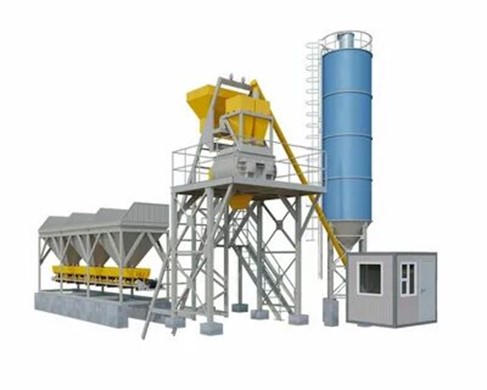
• Concrete mixers — for mixing components:
o Screw concrete mixers — for small and medium volumes.
o Pan and planetary concrete mixers — for large volumes.
• Dosing stations — for accurate dosing of components (cement, water, sand, and additives).
• Mobile concrete plants — for material processing at construction sites.
• Molding machines — for manufacturing blocks, tiles, and other concrete products.
• Vibropresses — for pressing and shaping concrete products.
• Concrete curing and aging units — chambers for storing products until the required strength is achieved.

  1. Equipment for Brick Production
    The process includes clay preparation, forming, firing, and packaging.

Equipment:
• Clay crushers and mixers — for grinding and preparing clay.
• Press machines — for forming bricks. Presses can be mechanical, hydraulic, or pneumatic.
• Firing lines — tunnel and rotary kilns for brick firing.
• Automatic packaging lines — for packing bricks onto pallets.

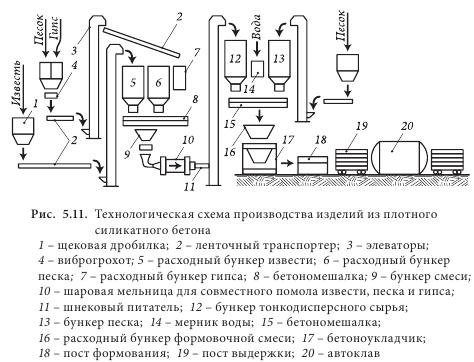
  1. Equipment for Production of Building Blocks (Aerated Concrete, Foam Concrete)
    Block production requires equipment for mixture preparation, forming, and curing.

Equipment:
• Mixers and blenders — for mixing components.
• Autoclaves — for curing aerated concrete blocks under pressure and temperature.
• Molds — for block forming.
• Cutting machines — for cutting blocks.
• Drying equipment — for removing excess moisture from blocks.

  1. Equipment for Tile and Ceramic Production
    Tile production includes stages of raw material preparation, pressing, firing, and packaging.

Equipment:
• Raw material mills — for grinding components.
• Press machines — for pressing raw material into tile shapes.
• Ceramic kilns — tunnel and rotary kilns for tile firing.
• Glazing machines — for applying glaze to tiles.
• Tile cutting and polishing equipment — for achieving required sizes and shapes.
• Automatic packaging lines — for tile packaging.

  1. Equipment for Production of Insulation and Thermal Insulation Materials
    The production of insulation materials requires equipment for melting, pressing, and forming materials.

Equipment:
• Extruders — for forming expanded polystyrene and other polymer materials.
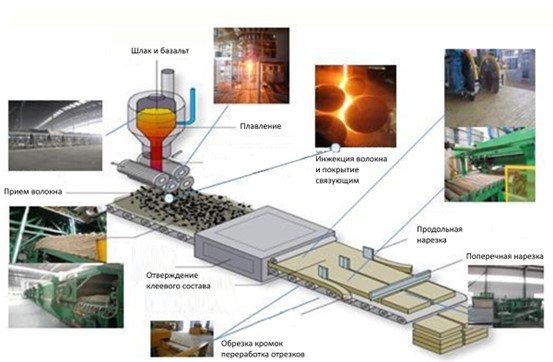
• Automatic mineral wool production lines — for melting, fiber drawing, and pressing into mats.
• Press machines — for producing boards and panels.
• Cutting machines — for cutting insulation materials to standard sizes.

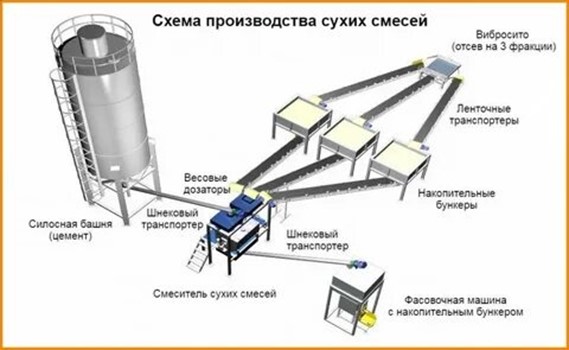
  1. Equipment for Production of Dry Construction Mixes
    Dry construction mixes such as plaster and adhesives are used in finishing and construction works.

Equipment:
• Dry mix mixers — for uniform mixing of components.
• Dosing systems — for accurate dosing of components (cement, sand, additives).
• Packaging units — automatic lines for packing mixes into bags or other packaging.
• Drying equipment — for removing excess moisture from the mix.

Conclusion
Production lines for manufacturing construction materials include various machines and installations that ensure high quality and process efficiency at all stages, from raw material preparation to packaging of finished products. Equipment must be accurately selected according to the type of material produced and the technological process to achieve optimal results.

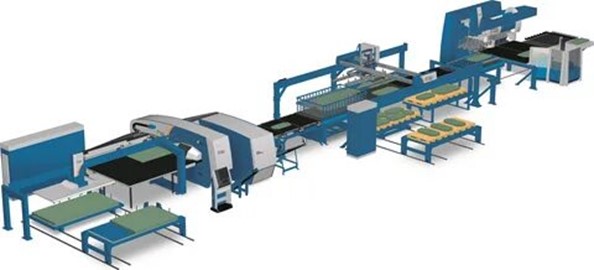
Drywall Production Lines
Drywall production lines include several key stages that ensure high-quality manufacturing of gypsum boards. All processes are automated to provide high speed and quality, from raw material preparation to packaging of finished products.

  1. Raw Material Preparation
    Drywall consists of gypsum (the main component of the board core) and facing layers (usually cardboard or other materials). The following equipment is used for raw material preparation:
    • Gypsum mills — for grinding natural gypsum into powder (hammer or ball mills).
    • Mixers — for mixing gypsum with water and additives (plasticizers, strengthening additives, etc.).
    • Autoclaves (if required) — for preliminary gypsum treatment under pressure.
    • Dosing systems — automatic dosing of components to maintain the required consistency.

  2. Drywall Board Forming
    After preparing the gypsum slurry and cardboard, the boards are formed. Equipment includes:
    • Extruders and press machines — for feeding the gypsum mixture into molds and creating a uniform gypsum layer between cardboard sheets.
    • Automatic cardboard laying lines — for uniform placement of cardboard onto the gypsum mixture.

  3. Drying of Drywall
    To remove excess moisture and ensure strength, drywall is dried using:
    • Conveyor dryers — drywall boards pass through drying tunnels with controlled temperature.
    • Infrared dryers — for fast drying using infrared radiation.
    • Air dryers — to maintain a constant airflow through the drywall.

  4. Pressing
    After drying, the boards pass through presses to increase strength:
    • Hydraulic and mechanical presses — for final pressing and improving board density.
    • Pressing rollers — for removing excess water and air and leveling the boards.

  5. Firing
    If required, drywall undergoes additional thermal treatment:
    • Calender machines — for thermal processing of drywall, improving its strength characteristics.

  6. Cooling
    After all thermal processes, drywall is cooled:
    • Cooling conveyors — boards pass through cooling tunnels with controlled temperature to prevent deformation.

  7. Quality Control
    After all stages, drywall is inspected for quality:
    • Automatic control systems — for checking geometry, strength, and other board characteristics.
    • Mechanical tests — bending tests, shear strength tests, and other parameters.

  8. Cutting and Packaging
    After production, drywall is cut and packaged for transportation:
    • Automatic cutting machines — for cutting boards to specified sizes.
    • Packaging machines — for packing boards in film, boxes, or other protective materials.
    • Palletizers — for stacking boards onto pallets.

  9. Possible Additional Stages
    • Coating and decorative finishing — drywall may be coated with special layers to improve appearance and add properties such as moisture resistance.
    • Addition of reinforcing materials — reinforcing materials may be added during forming to increase drywall strength.

This production scheme makes it possible to produce high-quality drywall with excellent physical and mechanical properties, making it suitable for wide use in construction and renovation.

Concrete Production: Technological Process
Concrete production is a key part of construction work, where a concrete mix is formed from various components and then used to create different structures. Concrete is one of the most widely used construction materials due to its strength, durability, and versatility.

  1. Preparation of Raw Materials
    The following components are used for concrete production:
    • Cement — a binding material that forms a solid substance when mixed with water. It can be ordinary or specialized (for example, with additives to improve properties).
    • Sand — a fine aggregate that affects the plasticity of the mix.
    • Crushed stone or gravel — a coarse aggregate that gives concrete strength and resistance to mechanical loads.
    • Water — necessary to activate cement and form hydration compounds.
    • Additives (optional) — used to modify concrete properties, such as setting accelerators, plasticizers, or frost-resistance additives.

  2. Mixing of Components
    After preparing all components, they must be thoroughly mixed in the required proportions. Mixing can be done manually or using specialized machines:
    • Concrete mixers — devices for mixing components.
    • Planetary and gravity mixers — for more uniform distribution of components in large volumes.
    Maintaining exact proportions is critically important, as it directly affects the strength characteristics of concrete.

  3. Transportation of the Mix
    After preparation, the mix must be delivered to the construction site or to the pouring form:
    • Concrete pumps — for delivering concrete to hard-to-reach areas.
    • Truck mixers — vehicles with rotating drums that help maintain mix uniformity during transportation.

  4. Placement and Forming
    Concrete is placed into prepared molds (formwork), which may be standard (for walls, columns) or custom-made for complex structures:
    • Slabs
    • Columns
    • Stair flights
    • Road surfaces and sidewalks

  5. Concrete Curing (Hardening)
    After placement, concrete begins the curing process, which lasts several days and depends on the reaction between cement and water (hydration). For optimal curing conditions:
    • Moistening — prevents rapid drying; the concrete surface is kept moist.
    • Temperature — the optimal curing temperature for concrete is about +20°C.
    Concrete usually reaches its design strength after 28 days, but depending on additives or curing methods, this process can be accelerated.

  6. Testing and Quality Control
    At all production stages, quality control is essential:
    • Test samples of concrete (cylinders or cubes) are taken for strength, durability, and frost resistance testing.
    This ensures compliance with construction standards and requirements.

  7. Delivery and Use
    Ready-mix concrete is used in construction works such as:
    • Foundation pouring
    • Reinforced concrete structures
    • Monolithic walls
    • Road pavements
    It is important to use concrete within a specific time after mixing (usually 2–3 hours) to preserve its properties.

Types of Concrete
Depending on composition and purpose, several types of concrete exist:
• Ordinary concrete — for standard construction structures.
• Reinforced concrete — with reinforcement to increase tensile strength.
• Lightweight concrete — with lightweight aggregates (perlite, pumice), reducing structural weight.
• High-strength concrete — for structures requiring high strength.
• Waterproof concrete — with additives to prevent water penetration.

Conclusion
The concrete production process requires strict adherence to technology at all stages—from raw material preparation to quality control of the finished product. This ensures durability, safety, and efficiency of concrete in construction projects.

Equipment for the Production of Building Blocks
Machines for the production of building blocks play a key role in automating and improving the quality of the manufacturing process. These machines ensure high precision, efficiency, and quality of finished products. Equipment for producing building blocks may include various machines depending on the product type and technology. Below are the main types of machines used in the production of different building blocks.

  1. Equipment for Concrete Block Production
    The concrete block production process involves several types of equipment depending on the technology used.

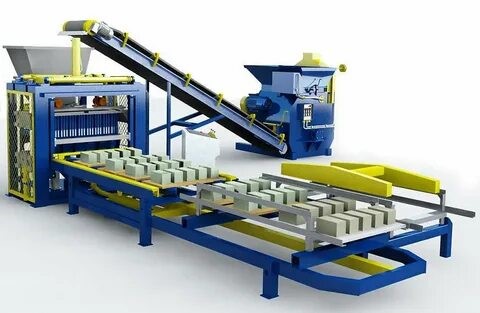
Vibropressing Machines
• Vibropresses — machines that provide vibration during concrete pressing into molds. Vibration helps remove air bubbles and ensures uniform material distribution in the mold, improving block density and strength.
• Pressure pressing machines — these machines apply high pressure, contributing to the formation of dense and high-quality blocks.

Autoclaved Block Production Lines
• Autoclave lines are used for producing aerated concrete and cellular concrete blocks. The blocks are exposed to steam at high temperature and pressure, which improves their thermal insulation properties and strength.

  1. Equipment for Aerated Concrete Block Production
    Aerated concrete is a lightweight material with good thermal insulation properties, and specialized equipment is used for its production.

Autoclaved Aerated Concrete Lines
• Aerated concrete mixers — machines for mixing cement, sand, lime, aluminum powder, and other components with water to form the aerated concrete mix.
• Autoclaves — units for thermal treatment of the aerated concrete mix under pressure and temperature, producing blocks with high performance characteristics.

Foam Generators and Foaming Machines
• These devices ensure uniform distribution of air bubbles in the mix, which is the basis for producing aerated concrete.

  1. Equipment for Ceramic Block Production
    The production of ceramic blocks includes several key stages: forming, firing, cooling, and packaging.

Extruders and Press Machines
• Extruders — machines that feed clay mass through a die, extruding the material into the required shape to form blocks.
• Screw press molds — used to create rectangular or other block shapes.

Ceramic Kilns (Firing)
• Tunnel kilns — blocks pass through several temperature zones and are fired in the kiln, making them strong and durable.
• Shaft kilns — a traditional but still used type of kiln with vertical arrangement of blocks for firing.

  1. Lines for Porous Block Production
    Porous blocks such as slag blocks or blocks based on expanded materials require specialized production lines.

Slag Block Production Lines
• Slag mixers — used for mixing slag, sand, and cement.
• Vibropresses for slag blocks — used to form blocks with vibration, ensuring density and product quality.

  1. General Equipment for All Types of Blocks
    For efficient operation of all block types, systems and machines are required to automate and optimize the production process.

• Conveyors and transport systems — for moving blocks at various stages of production, including pressing, drying, and packaging.
• Automation systems — used to control all processes such as component dosing, mixing, and pressing. These systems help ensure accuracy and speed while minimizing human error.

Conclusion
Modern machines for building block production provide a high level of automation, significantly improving product quality and production efficiency. Each piece of equipment performs its key role at different stages—from raw material mixing to packaging of finished products—allowing the production of various block types that meet all construction standards.


Our services

SUPPLIER SEARCH AND VERIFICATION IN CHINA

Equipment search through partner databases, by countries worldwide, and among industry leaders.

BEST PRICES FOR EQUIPMENT FROM CHINA

Our local representatives will get you the best prices directly from manufacturers.

COUNTERPARTY VERIFICATION IN CHINA

Verification of the company’s registration date, licenses, litigation history, and actual address.

DELIVERY TERMS FROM CHINA

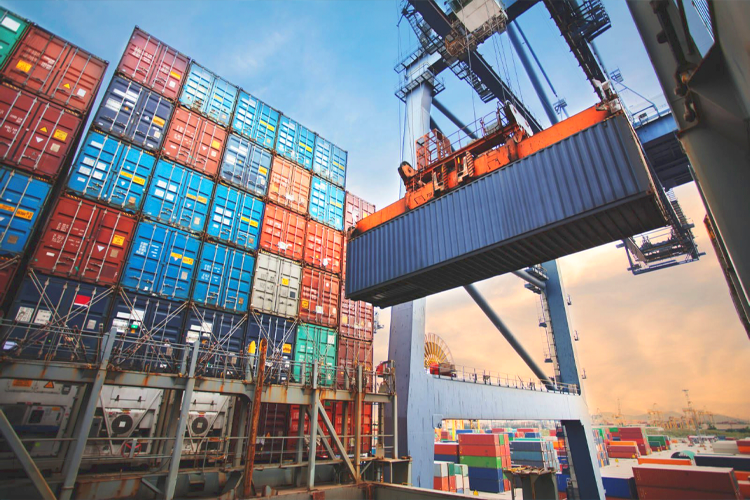
We will deliver your order on the most favorable logistics terms for you (air, rail, or truck).

CONTRACTING

Preparation of export-import contracts: Customs clearance procedures in China and customs clearance in Uzbekistan.

QUALITY CONTROL

Our local representatives control the entire production process of equipment and goods.
LOGISTICS

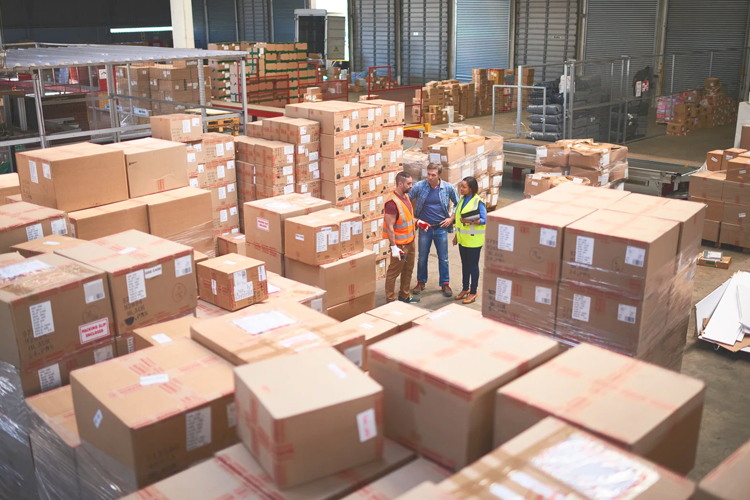
Supervision of the loading process, providing photo and video reports.
INSTALLATION

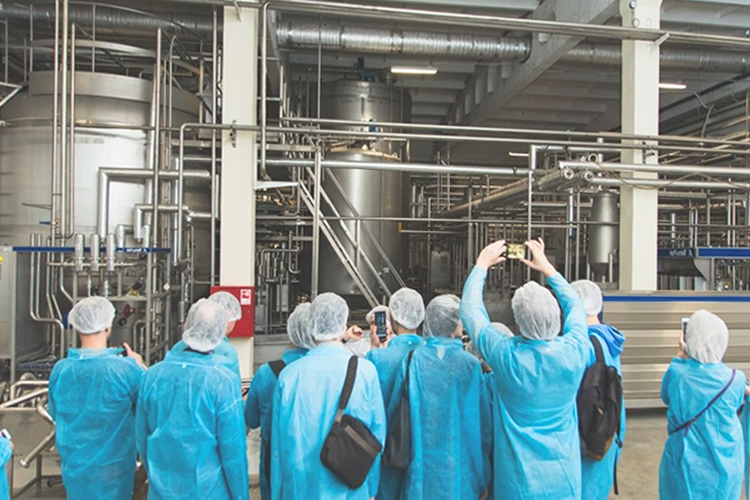
Commissioning works and staff training in Uzbekistan.
Our additional services

The main goal of the company Grande is to organize mutually beneficial cooperation between entrepreneurs and companies from around the world and China.

Fast and reliable delivery of goods from China to any destination.

Find a partner for cooperation with China right now.

Receive reliable legal support for business in China.

Reliable purchase of equipment from China with guaranteed quality and reliability.

High-quality verification of Chinese companies before cooperation and investment.

Individual guide in China for visiting factories and business meetings.

Reliable delivery of goods from China directly to your warehouse.

Wholesale purchase of goods from China on favorable terms.

Efficient freight delivery from China at favorable rates.

Directions

The company “Grande” offers an unlimited selection of high-quality, high-tech equipment, machines, installations, and technical tools from leading Chinese manufacturers on a turnkey basis and provides recommendations to its clients on all matters related to purchasing equipment and goods.

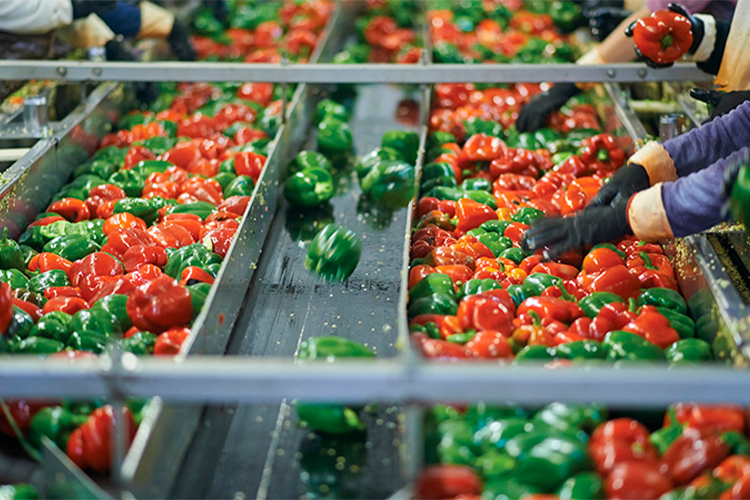
We will assist you in selecting agricultural equipment and machinery for growing, harvesting, sorting, and processing fruit and vegetable crops, as well as other types of agricultural production.

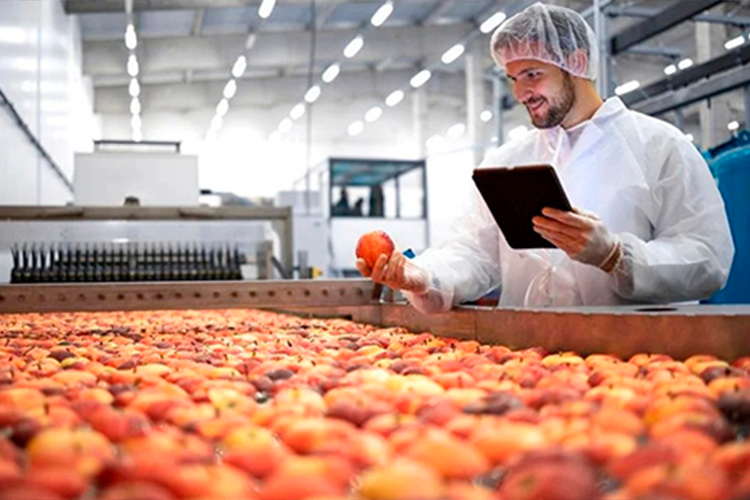
Supply of high-quality equipment and belts for food production. Familiarize yourself with the list of main types of machines used in the food industry.

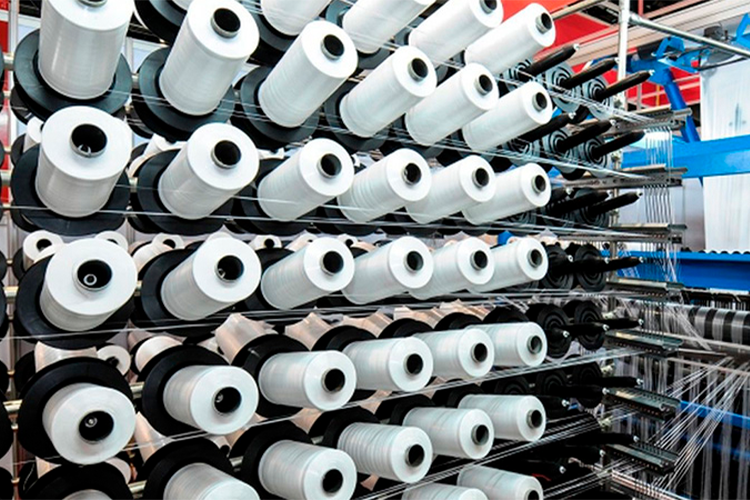
Comprehensive solutions for the light industry from China at affordable prices. Equipment for raw cotton processing, textile printers, weaving machines, textile dyeing equipment, and more.

We offer a wide range of equipment for the production of construction materials. With us, you’ll find machinery for manufacturing paints and varnishes, equipment for producing ceramic materials and products, as well as other types of equipment at the best prices.

Specialized machinery for use in the mining industry, including rock crushing equipment, mineral exploration tools, equipment for extracting mining and chemical raw materials, and other machinery from Chinese manufacturers at the best prices.

We offer innovative equipment for extracting metals from ores or other types of raw materials, as well as technology related to altering the chemical composition, structure, and properties of metal alloys, and the production of various metal products from them.

Turnkey logistics.
Delivery of goods, raw materials, and materials directly from China to your city.

Trust your business to professionals

Our company has extensive experience in direct cooperation with Chinese companies. Grande specialists help businesses daily to purchase high-quality products from trusted Chinese suppliers. Moreover, Grande will assist you with all documentation and ensure the delivery of your goods to your warehouse or facility.

0 +
Direct partner manufacturers of the company
0 +
Years of experience working with Chinese companies
0 +
Regular partners in Uzbekistan and the CIS
Scroll to Top
Contact Us ×