Equipment from China for the metallurgical industry
We offer the latest models of popular equipment and machinery for the metallurgical industry. Our competitive prices and transparent terms are accompanied by fast delivery.
Automation of Metallurgical Processes: Implementation of Technologies to Improve Production Efficiency
Automation in metallurgy involves the introduction of advanced information technologies, software, and specialized devices to optimize and control metal production processes. The aim of automation is to improve efficiency, enhance product quality, reduce energy consumption, shorten operation times, and increase safety.
Key Areas of Automation in Metallurgy
Automation of Metal Smelting Processes
Blast Furnace Smelting: Automated systems control the supply of raw materials (ore, coke, fluxes) and oxygen into the furnace, as well as regulate the operation of blowing devices and gas cleaning systems. This improves process stability and reduces material consumption.
Electric Arc Furnace Smelting: Automatic control systems regulate the voltage and current in the arc, adjusting the supply of scrap or scrap metal, which facilitates precise control of temperature and metal composition.
Automation of Refining Processes
During steel refining in converters, automated systems for controlling oxygen, temperature, and carbon content help improve steel quality, increase productivity, and reduce material losses.
Automation of Casting Processes
Molten Metal Temperature Control: Automatic systems monitor the temperature of molten metal and its distribution across the mold, reducing the likelihood of defects.
Casting Process: Automation of metal pouring into molds with precise control of temperature and pressure prevents defects such as cracks and air bubbles in the finished products.
Automation of Heat Treatment Processes
Quenching and Annealing: Automation allows precise control of temperature and holding time in furnaces, improving the quality of heat treatment.
Automation of Cold Working Processes
During cold working (e.g., cold rolling or extrusion), automatic systems control pressure, rolling speed, and temperature, ensuring precise dimensions and structure of finished products.
Key Equipment for Metallurgical Process Automation
Automatic Control Systems (ACS)
ACS allow centralized control of all operations, providing real-time data collection and processing, equipment management, and process optimization.
Sensors
Temperature Sensors: For precise temperature control of molten metal and finished products.
Pressure Sensors: For monitoring pressure in gas and water supply systems, as well as in furnaces.
Gas Analyzers: For monitoring gas composition during smelting and refining processes.
Programmable Logic Controllers (PLC)
PLCs provide automatic control of processes in furnaces, rolling mills, and other metallurgical production devices.
Robotic Systems
Robots can be used for various tasks, such as raw material supply, unloading finished products, equipment cleaning, and controlling the casting process.
Intelligent Systems and Artificial Intelligence (AI)
Intelligent systems and AI analyze real-time sensor data, predict failures, and suggest optimal settings to improve quality and efficiency.
Monitoring and Dispatch Systems
Centralized monitoring systems track equipment status, temperature and chemical parameters, energy consumption, and productivity, enabling rapid responses to changes.
Advantages of Metallurgical Process Automation
Increased Productivity: The acceleration of processes allows for significant increases in production volume.
Reduction of Human Errors: Automatic systems eliminate mistakes caused by human factors.
Improved Product Quality: Precise parameter control contributes to the production of higher-quality materials.
Reduced Energy Consumption: Process optimization helps decrease energy consumption, leading to cost savings.
Enhanced Safety: Automation reduces the need for manual operations, minimizing risks for workers.
Conclusion
Automation of metallurgical processes is becoming an integral part of modern metallurgical enterprises, helping to improve production efficiency, enhance product quality, reduce costs, and increase workplace safety. The implementation of advanced technologies, such as intelligent systems and robots, significantly improves production processes and opens new opportunities for further development in the industry.
Converters in Metallurgy: Types, Purpose, and Working Principles
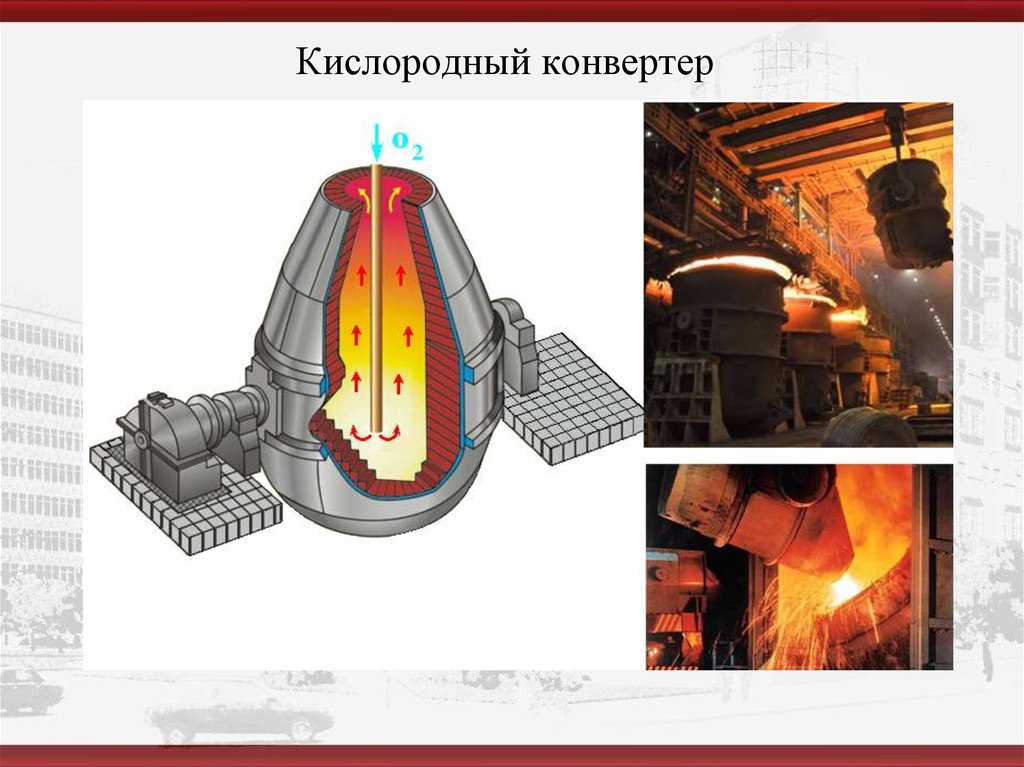
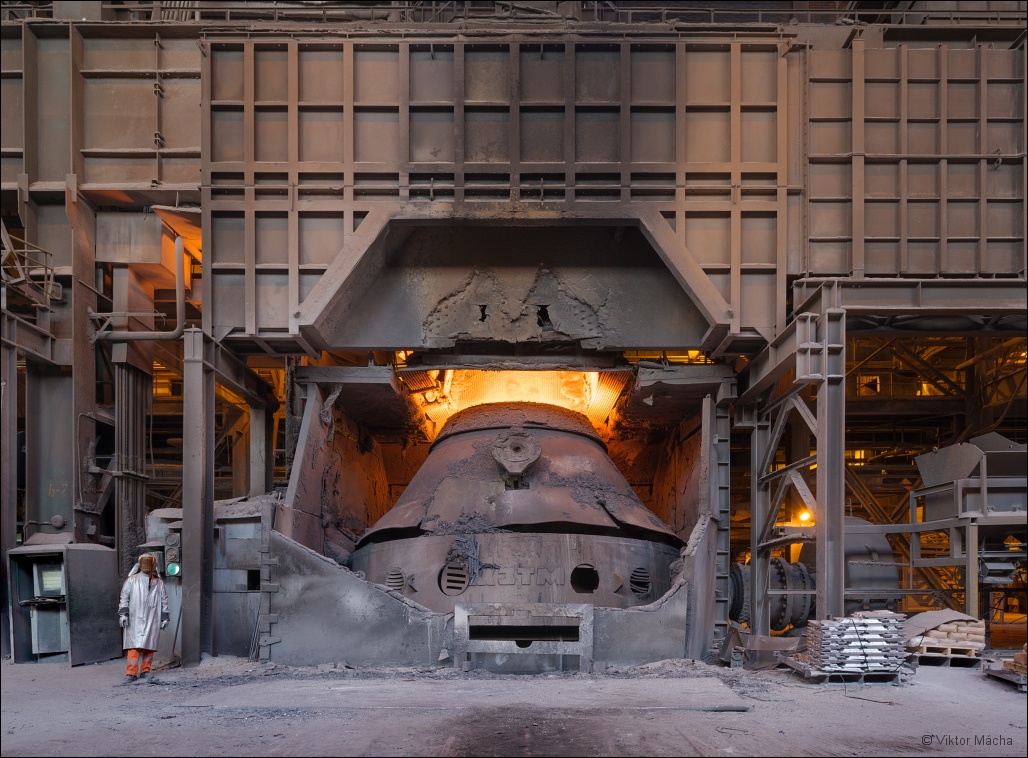
Converters are essential devices in metallurgy used for melting, refining, and altering the chemical composition of metals, primarily for steel production. Their main task is to oxidize carbon and other impurities in liquid metal using oxygen, which results in steel with the desired chemical and mechanical properties.
Main Types of Converters in Metallurgy
Blast Furnace Converters These are used to convert pig iron into steel by oxidizing carbon and other impurities such as manganese, silicon, phosphorus, and sulfur.
Working Principle: Pig iron, produced in the blast furnace, is transferred to the converter, where oxygen is supplied to oxidize the carbon into carbon dioxide, thus reducing the carbon content in the steel. Slag may also be added for purification.
Equipment:
Oxygen injectors for oxygen supply to the metal.
Thermometers and gas analyzers to monitor temperature and gas composition.
Flux feeding systems to purify the metal from impurities.
Bessemer Converters (for pig iron processing into steel) Used in the Bessemer process, where oxygen is applied to oxidize carbon and other impurities in pig iron.
Working Principle: Oxygen is injected into the metal through nozzles, creating an exothermic reaction that helps remove carbon and other impurities, producing low-carbon steel.
Equipment:
Lifting mechanism for tilting the converter.
Oxygen feeding system to saturate the metal with oxygen.
Slag cover for protection against high temperatures and chemical reactions.
Converters for Producing Low-Alloy Steels These converters are designed for producing steels with added alloying elements like nickel, chromium, molybdenum, etc.
Working Principle: Precise control of alloying elements and carbon content is essential, allowing for the production of steels with specific mechanical properties.
Equipment:
Systems for injecting alloying elements.
Gas analyzers for monitoring the chemical composition of the metal.
Cooling systems to maintain optimal temperature conditions.
Converters for Stainless Steel Production These converters are used to produce stainless steel, refining the metal by removing carbon and other impurities while adding alloying elements such as chromium, nickel, and molybdenum.
Working Principle: Oxygen is supplied under high pressure, effectively removing carbon and controlling the content of alloying elements. Additional fluxes are used to remove sulfur and phosphorus.
Equipment:
Lifting mechanisms for handling heavy loads.
Gas analyzers for analyzing gas composition.
Flux feeding systems for removing impurities from the metal.
Main Stages of Converter Operation
Raw Material Loading: Pig iron from the blast furnace is loaded into the converter. Fluxes and other additives are also added at this stage.
Carbon Oxidation: Oxygen or air is introduced into the converter, oxidizing the carbon and forming carbon dioxide, which is removed via the exhaust gases.
Impurity Removal: During oxidation, impurities such as sulfur, phosphorus, and silicon are removed with the help of slag.
Chemical Composition Control: Continuous monitoring of the chemical composition of the metal is carried out using sensors and gas analyzers to achieve the desired steel parameters.
Extraction of Finished Metal: Once the smelting process is complete and the desired composition is achieved, the metal is extracted from the converter and sent for further processing.
Conclusion
Converters play a crucial role in metallurgical production by ensuring the production of steel with the necessary chemical and mechanical properties. The use of different types of converters allows for efficient metal processing, quality improvement, and precise control of parameters, all of which contribute to optimizing production and reducing the cost of the final product.
Metal Processing Machines: Types, Purpose, and Working Principles
Metal processing machines are equipment designed to change the shape, structure, and chemical composition of metals to obtain finished products such as sheets, profiles, wire, pipes, and other items. These machines play a key role in metallurgy and the manufacturing industry, where metals undergo numerous operations, including melting, processing, forming, cutting, and more.
Main Types of Metal Processing Machines
Crushers Crushers are used to crush metal waste or ore into the required fraction for further processing.
Working Principle: Crushers use compression, impact, or shear mechanisms to break down the material. Depending on the type of crusher (jaw, cone, hammer), the material is crushed using rotating drums or hammers.
Equipment Types:
Jaw crushers – for primary crushing.
Cone crushers – for secondary crushing.
Hammer crushers – for fine crushing.
Metal Melting Furnaces Melting furnaces are used to turn metals into a liquid form, allowing the removal of impurities and preparing the material for further processing.
Working Principle: Metal is melted in high-temperature furnaces (electric, gas, or induction), after which it is purified from impurities.
Equipment Types:
Electric arc furnaces – for melting non-ferrous metals and steel.
Induction furnaces – for melting small batches of metals.
Gas furnaces – for melting ferrous metals.
Press Machines Press machines are used for plastic metal processing, such as forming, stamping, and drawing.
Working Principle: The press applies high pressure to change the shape of the metal. Dies or molds are used in which the metal is placed.
Equipment Types:
Hydraulic presses – for large and thick billets.
Mechanical presses – for small and medium-sized parts.
Expansive presses – for expanding tubes and other billets.
Sheet Bending Machines These machines are designed for bending metal sheets and strips into the required shape, which is particularly important in the production of thin sheet metal.
Working Principle: Sheet bending machines use various devices, such as knives and punches, to change the shape of the metal sheet by applying force.
Equipment Types:
Roll bending machines – for bending sheets and strips.
Press bending machines – for precise bending and forming of parts.
Metalworking Machines Metalworking machines are used for precise processing of metal billets, including milling, turning, drilling, and grinding operations.
Working Principle: Cutting tools are used to remove excess metal from the billet’s surface, giving it the desired shape.
Equipment Types:
Lathes – for processing round billets.
Milling machines – for removing material from the surface of billets.
Grinding machines – for creating smooth and precise surfaces.
Metal Cutting Machines Metal cutting machines are designed for cutting billets into parts, allowing for precise separation of material.
Working Principle: Various cutting methods are used: mechanical (blades, saws), thermal (laser, plasma), and hydraulic cutting.
Equipment Types:
Laser cutters – for high-precision metal cutting.
Plasma cutters – for cutting thick metal sheets.
Metal shears – for cutting thin sheets and strips.
Welding Equipment Welding machines are used to join metal parts by melting their edges and adding filler material.
Working Principle: Welding machines generate high temperature through an electric arc or plasma to melt and join metals.
Equipment Types:
Arc welding machines – for welding carbon and alloy steels.
Spot welding machines – for joining sheet materials at points.
Gas welding machines – for working with non-ferrous metals.
Conclusion
Metal processing machines provide essential operations in metallurgy and the manufacturing industry, enabling the efficient conversion of metals into various products. From crushing and melting to precise machining and welding, all these processes require specialized equipment that helps produce products with the necessary characteristics while minimizing production costs.
Metallurgic treatment: types, stages, and equipment Metallurgic treatment involves processes in which metal undergoes various methods to produce final products or intermediate goods, such as ingots, rolled products, pipes, wire, etc. These processes include melting, forging, stamping, and other methods that alter the physical and chemical properties of the metal to achieve the desired characteristics. Stages of metallurgic treatment
Metal melting Melting is the process of transforming solid metal materials into a liquid form, which allows for the removal of impurities and further operations for purification and alloying. • Process: Ore or metal scrap is loaded into furnaces, where the metal melts at high temperatures. • Equipment: o Electric arc furnaces — for melting steel and non-ferrous metals. o Induction furnaces — for melting small batches of metals, such as aluminum, copper, gold. o Converters — for converting pig iron into steel and refining steel.
Metal casting At this stage, the liquid metal is poured into molds, where it cools and solidifies, turning into ingots or billets for subsequent processes. • Process: Liquid metal is poured into molds (ladles, casting molds), where it cools and solidifies. • Equipment: o Casting mechanisms — ladles and casting machines for pouring molten metal. o Continuous casting systems — allow producing metal in a continuous process to create long profiles such as strips or ingots.
Pressing and forging These plastic deformation methods shape the metal under the influence of force, changing its shape without changing its volume. • Process: Metal undergoes mechanical pressure to change shape; for example, ingots can be turned into rolled billets or other products. • Equipment: o Hydraulic presses — used to press metal under high pressure. o Mechanical presses — applied for cold working. o Forging machines — for hot working and obtaining various shapes.
Heat treatment of metals Heat treatment involves heating and cooling metals to improve their mechanical and physical-chemical properties. • Process: Metal is heated to a certain temperature and then cooled, which affects its structure (e.g., increasing hardness or plasticity). • Equipment: o Hardening furnaces — for heating and cooling metal to increase its hardness. o Quenching installations — for rapid cooling in water or oil. o Annealing furnaces — for slow cooling and improving the plasticity of metals.
Pressure treatment of metals Stamping, rolling, and extrusion are the main methods of metal processing using compressive forces, leading to plastic deformation. • Process: Metal is subjected to compressive forces, changing its shape. • Equipment: o Rolling mills — for rolling metal into sheets, strips, pipes, and other shapes. o Stamping presses — for creating parts with precise geometry. o Extrusion presses — for producing long products with a constant cross-section.
Welding and brazing Welding is used to join metal parts using heat, while brazing is done using a filler metal. • Process: In welding, metals are joined by melting them, while brazing uses a filler with a lower melting point to join parts. • Equipment: o Welding machines (arc welding, TIG, MIG) — for welding metal parts. o Soldering machines — for joining metal elements through brazing.
Grinding and polishing These processes are used to improve the surface of the metal, preparing it for further operations or enhancing its appearance. • Process: Metal is processed using abrasives or grinding machines to create a smooth surface. • Equipment: o Grinding machines — for rough and finishing processing. o Polishing machines — for final treatment and achieving a mirror-like surface.
Application of metallurgic treatment Metallurgic treatment is used in various industries, such as: • Automotive • Shipbuilding • Aviation • Energy • Construction • Household goods production This process is essential for creating structural materials, automotive parts, pipes, construction elements, and other metal products. Metallurgic treatment contributes to the development and maintenance of industrial standards, improving manufacturing efficiency and product quality.
Metallurgical furnaces play a crucial role in ore processing and metal production, ensuring melting, refining, and enrichment of metals, as well as supporting various chemical processes. Depending on their purpose and the processes involved, they can differ significantly from each other.
Main types of metallurgical furnaces
Melting furnaces Melting furnaces are designed for melting metals and alloys. • Blast furnaces:
Purpose: Producing pig iron from iron ore.
Working principle: Reduction smelting with carbon as the reducing agent. Ore, coke fuel, and fluxes are fed into the furnace.
Types: Oxygen-fired, gas-fired, and internally heated. • Electric arc furnaces:
Purpose: Melting metals (e.g., steel) from scrap.
Working principle: Melting with electric current through graphite electrodes creating high temperatures.
Types: Air-cooled, with gas purifiers. • Induction furnaces:
Purpose: Enhancing steel quality through intensive oxygen supply.
Working principle: Oxygen accelerates the refining process.
Regenerative furnaces Used for melting and processing metals in forging production. • Forge furnaces:
Purpose: Heating billets before forging and stamping.
Types: Gas, electric, and combined. • Regenerative furnaces:
Working principle: Use the heat of exhaust gases to preheat incoming air or gas, improving efficiency.
Furnaces for non-ferrous metal smelting These furnaces are used for melting and processing non-ferrous metals. • Aluminum furnaces:
Purpose: Melting aluminum and its alloys.
Working principle: Induction or gas-fired furnaces are used. • Copper furnaces:
Purpose: Melting copper to produce high-purity copper.
Types: Vacuum, induction, and gas-fired.
Furnaces for heat treatment of metals These furnaces alter the structure of metals to improve their mechanical properties. • Hardening furnaces:
Purpose: Rapid cooling of metals after heating to increase strength.
Working principle: Metal is heated to high temperature and then quickly cooled.
Types: Convection, vacuum. • Annealing furnaces:
Purpose: Restoring metals after forging.
Working principle: Heating to recrystallization temperature followed by slow cooling.
Main equipment of metallurgical furnaces • Furnace heating systems — for heating the furnace. • Electrodes — used in arc and induction furnaces. • Converters — for steel processing. • Pistons and aggregates — for controlling oxygen supply.
Metallurgical furnaces ensure essential processes in metallurgy, and the choice of furnace type depends on the required operation and the type of material being processed.
Metal casting is a process where molten metal is poured into a mold to create products with specific characteristics. This process is widely used in various industries such as automotive, shipbuilding, machinery, and construction. The equipment for metal casting includes several key categories, each performing its own function.
Furnaces Furnaces are used to melt metals, turning them into a liquid state for pouring into molds.
Electric Arc Furnaces:
Purpose: Melting steel, cast iron, and non-ferrous metals.
Induction Furnaces:
Purpose: Melting light metals like aluminum, copper, and their alloys.
Gas and Oil Furnaces:
Purpose: Melting large volumes of metal, such as cast iron and steel. Working principle: Metal is melted at high temperatures to achieve the necessary liquid form for pouring into molds.
Molds for Casting Molds are devices into which molten metal is poured to produce the final product.
Sand Molds:
Purpose: For casting small and medium-sized parts. These molds are widely used due to their low cost and simplicity.
Metal Molds:
Purpose: For casting larger and more precise parts. These molds can be used repeatedly.
Plastic and Silicone Molds:
Purpose: For creating complex and high-quality surfaces.
Wax Molds:
Purpose: For wax pattern casting technology, such as for jewelry. Working principle: Molds can be single-use (sand molds) or reusable (metal, plastic molds). Once the metal solidifies, the mold is removed, and the part is extracted.
Casting Machines Casting machines automate the process of pouring molten metal into molds, increasing production speed and precision.
Pressure Die Casting Machines:
Purpose: Casting non-ferrous metals (aluminum, magnesium, copper) under high pressure, ensuring high precision and surface quality.
Die Casting Machines:
Purpose: Casting in metal molds for large parts with high strength.
Hot and Cold Chamber Casting Machines:
Purpose: For casting in different temperature conditions, depending on the metal properties and mold type. Working principle: These machines smoothly feed molten metal into the mold, ensuring optimal distribution and minimizing defects.
Cooling and Heat Treatment Equipment After casting, the metal needs to be cooled to achieve the required mechanical properties and dimensional stability.
Cooling Chambers:
Purpose: Accelerated cooling of parts after casting to prevent deformation and stabilize dimensions.
Washing and Cooling Baths:
Purpose: Rapid cooling of small parts using water or cooling solutions. Working principle: Cooling prevents defects like cracks and ensures the required strength and durability of the metal.
Casting Cleaning Equipment After the metal solidifies and the mold is removed, castings need cleaning to improve their appearance and quality.
Grinding Machines:
Purpose: Removing excess material and seams left after casting.
Shot Blasting Units:
Purpose: Removing oxide films and contaminants from the surface of castings.
Shot Blasting Machines:
Purpose: Cleaning castings from sand mold residues. Working principle: These machines effectively process surfaces, improving the quality of the finished product.
Additional Processes and Equipment
Quality Control: Methods such as ultrasonic testing and X-ray inspection are used to check the internal structure and quality of castings.
Annealing Equipment: Applied to improve the mechanical properties of castings after casting, increasing their strength and plasticity.
Metal casting is a complex and multi-task process requiring precise equipment at every stage. The selection and proper use of these technologies allow for the creation of high-quality metal products that meet the strict requirements of various industries.
Steel processing is a set of processes aimed at changing the physical and mechanical properties of steel to obtain products with the desired characteristics. Specialized equipment is used for these processes, playing a key role in ensuring accuracy, quality, and production efficiency.
Steel Cutting Equipment Steel cutting is necessary to form parts of a given shape and size, and can be either mechanical or thermal.
Guillotine Shears:
Purpose: Straight-line cutting of steel sheets and strips.
Features: Ensures precision and minimizes waste.
Laser Cutters:
Purpose: High-precision cutting of metals, especially for complex parts.
Features: Uses a high-powered laser beam for precise cutting.
Plasma Cutters:
Purpose: Cutting thick steel using high-temperature plasma.
Water Jet Cutters:
Purpose: Cutting steel without high temperatures, preventing thermal distortion. Working principle: Depending on the equipment, cutting can be done using mechanical force, laser beams, plasma flows, or high-pressure water jets.
Drilling Equipment Steel drilling is necessary for creating holes that may be used for mounting or connections.
Drilling Machines:
Purpose: Creating holes in blanks. They can be either vertical or horizontal.
Radial Drilling Machines:
Purpose: Drilling holes in long workpieces.
Robotic Drilling Systems:
Purpose: Used in automated lines for high-speed and precise processing. Working principle: Drilling machines use rotating drills to create holes in metal, allowing for various diameters and depths.
Grinding and Polishing Equipment Grinding and polishing are necessary to achieve the required dimensional accuracy and surface quality.
Grinding Machines:
Purpose: Processing flat and cylindrical surfaces.
Purpose: Achieving a mirror-like surface on steel products.
Robotic Grinding Systems:
Purpose: Processing parts with high precision and automated processes. Working principle: Abrasive materials (grinding wheels, belts, discs) are used to remove thin layers of metal, providing smoothness and surface accuracy.
Forging and Stamping Equipment Steel forging is used to form products of complex shapes from hot metal.
Hammers and Press Machines:
Purpose: Steel forging using impact processing.
Types: Pneumatic, hydraulic, and mechanical hammers.
Stamping Press Machines:
Purpose: Mass production of parts with a specified shape and size.
Hydraulic Press Machines:
Purpose: Plastic deformation of steel under high pressure. Working principle: These machines change the shape of the metal through impact or gradual pressure, using presses and hammers to create parts of the required form.
Thermal Processing Equipment for Steel Thermal processing of steel includes processes such as hardening, annealing, normalizing, and others to alter the material’s structure and properties.
Furnaces for Thermal Treatment:
Purpose: Heating steel to a specific temperature and cooling it to achieve the required properties (hardening, annealing).
Purpose: Rapid cooling of steel after heating (e.g., in water or oil).
Induction Furnaces:
Purpose: Localized heating of steel for thermal treatment of specific areas. Working principle: Steel is heated to the necessary temperature, then cooled to alter the microstructure, improve mechanical properties, and ensure the required characteristics.
Bending and Forming Equipment Bending machines are designed to create bends and shape steel workpieces.
Bending Machines:
Purpose: Deforming steel products using force. They can be hydraulic or mechanical.
Rollers:
Purpose: Rolling and shaping steel sheets into a given form (e.g., in the production of pipes, beams, and profiles). Working principle: Equipment uses force to deform the metal, giving it the required shape through applied pressure.
Each of these types of equipment performs a specific task in the steel processing process, and the correct choice of tool depends on the type of operation, required precision, and the characteristics of the final product.
Welding is a process of joining metal materials using heat, pressure, or a combination of both, and specialized equipment is required for this. Depending on the type of welding, materials, and the quality requirements of the joint, various equipment is used to create strong and durable connections.
Arc Welding Machines Arc welding is one of the most common methods, where an electric arc forms between the electrode and the workpiece, creating heat to melt the metal.
Equipment:
Welding Transformers:
Purpose: Generating electric current for arc heating of metal.
Inverter Welding Machines:
Purpose: Using inverter technology for stable welding current with lower energy consumption, operates under varying loads.
Semi-Automatic Welding Machines:
Purpose: Use wire as the electrode, used for MIG/MAG welding in various environments, including inert gases. Working principle: An electric arc is created between the electrode and the workpiece, heating the metal to a high temperature, causing it to melt and join.
TIG Welding Machines (Argon Arc Welding) TIG welding (Tungsten Inert Gas welding) is used for joining thin-walled metal parts, such as aluminum, copper, and stainless steel.
Equipment:
TIG Welding Machines:
Purpose: Provide precise parameter settings for using tungsten electrodes and argon to protect the weld pool from oxidation.
Manual TIG Welders:
Purpose: For welding small parts and precise joints.
Automatic TIG Welding Systems:
Purpose: Used for large structures, such as welding pipes and vessels. Working principle: An electric arc is created between the tungsten electrode and the workpiece, with argon used to protect the weld pool from the external atmosphere.
MIG/MAG Welding Machines MIG (Metal Inert Gas) and MAG (Metal Active Gas) welding use inert or active gases, respectively, and are widely used for welding sheets, pipes, and frame structures.
Equipment:
MIG/MAG Semi-Automatic Welders:
Purpose: Feed welding wire into the weld zone with a feed mechanism and protect the weld pool with inert or active gases.
Gases for MIG/MAG Welding:
Purpose: Argon, carbon dioxide, or their mixtures are used to protect from oxidation.
MIG/MAG Welding Torches:
Purpose: Equipped with wire feed and gas supply systems to protect the weld seam. Working principle: Welding wire is automatically fed into the weld pool, where it melts to form the joint, and gas protects the weld from oxidation.
Resistance Welding Machines Resistance welding is used to join metal sheets by applying pressure and passing current through the contact points.
Equipment:
Spot Welding Machines:
Purpose: Use two electrode contacts to weld thin sheets or metal plates.
Robotic Resistance Welding Systems:
Purpose: Automated systems used in mass production to ensure precision and repeatability.
Press Machines for Welding:
Purpose: Used to weld parts at contact points under pressure. Working principle: Electric current is passed through the contact points, generating heat that melts the metal, which is then joined under pressure.
Pipe Welding Machines (Automatic Welding) Pipe welding equipment ensures high-quality and durable connections for pipes.
Equipment:
Pipe Welding Machines:
Purpose: For welding pipes of various diameters and thicknesses, equipped with wire feed, cooling, and gas protection systems.
Underwater Welding Machines:
Purpose: Specialized equipment for performing welding work in underwater conditions (e.g., for pipeline repair). Working principle: An arc is created between the electrode and the pipe with the feeding of welding wire, ensuring a strong joint.
Gas Welding Machines Gas welding uses a burning gas (usually acetylene) to create high temperatures needed to melt and join metals.
Equipment:
Gas Welding Torches:
Purpose: Supply of fuel gas and oxygen to create the necessary temperature for welding.
Gas Cylinders:
Purpose: Used to store acetylene and oxygen, which are supplied through regulators to the torch. Working principle: Gas welding relies on using the flame to melt the edges of the metals, creating a joint by fusing them together.
Each type of welding equipment corresponds to specific processes and materials, allowing for high precision and strong connections.
Press Machines for Metallurgy: Types, Purpose, and Operating Principles
Press machines play a crucial role in metallurgy by providing mechanical processing of metals through pressure and deformation. These machines perform key operations such as stamping, bending, forging, punching, and forming at various stages of producing metal products and components.
Main Types of Press Machines for Metallurgy
Mechanical Press Machines Mechanical presses use mechanical energy to create force through flywheels, gears, or crank mechanisms.
Purpose: Stamping, punching, bending, and other operations with metal blanks.
Features:
High operating speed, effective for mass production.
Simple maintenance and operation.
Operating Principle: Movement is transmitted through the flywheel or mechanism to the press part, creating impact or cyclic forces to deform the metal.
Types:
Crank Presses: Used for generating impact forces, ideal for mass production.
Roller Presses: Provide even pressure and precision during processing.
Hydraulic Press Machines Hydraulic presses use hydraulic fluid to generate pressure, allowing precise control over the force applied.
Purpose: Pressing, stamping, bending, and other operations requiring high force.
Features:
Can generate higher forces than mechanical presses.
Force and speed can be adjusted based on the task.
Operating Principle: Pressure is generated by a hydraulic pump that transmits force to the press working part.
Types:
Hydraulic Stamping Presses: Used for punching, stamping, and forming.
Hydraulic Forging Presses: Used for hot and cold forging.
Pneumatic Press Machines Pneumatic presses use compressed air to create pressure suitable for operations that don’t require huge forces but need high speed and precision.
Purpose: For light operations with low-strength materials.
Features:
Compact and cost-effective.
Simple to maintain and operate.
Operating Principle: Compressed air enters the working chamber, causing deformation of the material.
Types:
Pneumatic Pressing Machines: For processing thin metals or forming.
Magnetic Press Machines Magnetic presses use electromagnetic fields to lift and move metal blanks, minimizing mechanical contact.
Purpose: For working with materials that respond to magnetic fields.
Features:
Precision processing.
No mechanical impact on the material.
Operating Principle: The electromagnetic field exerts pressure on the material to form it.
Applications of Press Machines in Metallurgy
Stamping: Press machines are used to stamp metal sheets into products of various shapes, such as parts for automobiles, construction structures, and equipment.
Punching: Used to cut holes and shapes in blanks, widely applied in producing various components.
Bending: Press machines ensure precise formation of angles and curves for making tubes, plates, and other items.
Forging: Press machines create high pressure to give metal the required shape and strength.
Advantages of Press Machines in Metallurgy
High Productivity: Press machines provide rapid processing of blanks, improving production efficiency.
Precision and Quality: The ability to control force and pressure precisely allows the production of parts with high accuracy.
Versatility: Press machines can be used for various operations depending on the type and configuration of the machine.
Press machines are an essential part of modern metallurgical production, ensuring the efficiency and high quality of material processing.
Metalworking Machines: Types, Purpose, and Operating Principles
Metalworking machines are specialized equipment designed to perform various operations such as cutting, drilling, milling, turning, and grinding with high precision. These machines play a key role in the production of metal products that require high-quality and precise specifications.
Main Types of Metalworking Machines
Lathe Machines Lathe machines are used for machining metal by rotating the workpiece and using a cutting tool to remove material.
Purpose: Turning, threading, and machining round, conical, and flat surfaces.
Operating Principle: The workpiece rotates, while the tool (cutter) moves along it to shape it.
Types:
Universal Lathes: Used for most general machining operations.
Precision and Production Models: For high-precision and mass production tasks.
Centering Lathes: For machining long workpieces.
Milling Machines Milling machines use rotating tools with multiple cutting edges to process metal.
Purpose: Milling, turning, and cutting complex surfaces.
Operating Principle: The cutting tool (milling cutter) rotates while the workpiece moves along an axis.
Types:
Vertical Milling Machines: The cutting tool is positioned vertically.
Horizontal Milling Machines: The cutting tool is positioned horizontally.
Copying Milling Machines: For machining complex shapes and contours.
Drilling Machines Drilling machines are designed for creating holes in metal workpieces.
Purpose: Drilling, boring, reaming, and tapping.
Operating Principle: The drill bit or tool rotates while the workpiece moves to create a hole.
Types:
Vertical Drilling Machines: The drill bit is oriented vertically.
Boring Machines: For machining larger holes.
Wide-Angle Drilling Machines: For machining wider holes.
Grinding Machines Grinding machines use an abrasive wheel to perform fine finishing on metal surfaces.
Purpose: Grinding, polishing, and deburring metal surfaces.
Operating Principle: The abrasive wheel rotates while the workpiece moves relative to it.
Types:
Surface Grinding Machines: For grinding flat surfaces.
Cylindrical Grinding Machines: For grinding round and cylindrical surfaces.
Internal Grinding Machines: For grinding internal surfaces.
Sheet Bending Machines Sheet bending machines are used to bend metal sheets and plates.
Purpose: Bending and forming sheet metal.
Operating Principle: The workpiece is placed on a die, and the bending tool (punch) creates the desired bend.
Types:
Mechanical Sheet Benders: Powered by mechanical drives.
Hydraulic Sheet Benders: Use hydraulic pressure for bending.
Punching Machines Punching machines are used for cutting holes in metal sheets.
Purpose: To cut holes or shape metal blanks.
Operating Principle: The working tool (punch) strikes the metal to cut it.
Metal Cutting Machines Metal cutting machines are designed for precise cutting of metal sheets to the required dimensions.
Purpose: Cutting metal into blank pieces of the desired size.
Operating Principle: A metal sheet passes between two knives or discs that cut the material.
Applications of Metalworking Machines
Metalworking machines are widely used across various industries:
Component Manufacturing: These machines allow the production of components for various devices and machines, such as engines, construction structures, and electrical equipment.
Mass Production: For mass-producing parts, ensuring high productivity and precision with minimal costs.
Repair and Restoration: These machines can be used to restore damaged or worn-out parts, saving resources and extending equipment life.
Advantages of Metalworking Machines
High Precision: Modern machines provide precision up to microns, which is crucial for the production of precision components.
Versatility: The equipment can perform multiple operations such as cutting, drilling, grinding, and more.
Automation: Modern machines can be automated, improving productivity and reducing labor costs.
Productivity: The high operating speed of these machines allows large volumes of metal to be processed in a short period, making them ideal for mass production.
Metalworking machines play an indispensable role in modern industry, ensuring high productivity and precision in the execution of complex metalworking operations.
Our services
SUPPLIER SEARCH AND VERIFICATION IN CHINA
Equipment search through partner databases, by countries worldwide, and among industry leaders.
BEST PRICES FOR EQUIPMENT FROM CHINA
Our local representatives will get you the best prices directly from manufacturers.
COUNTERPARTY VERIFICATION IN CHINA
Verification of the company’s registration date, licenses, litigation history, and actual address.
DELIVERY TERMS FROM CHINA
We will deliver your order on the most favorable logistics terms for you (air, rail, or truck).
CONTRACTING
Preparation of export-import contracts:
Customs clearance procedures in China and customs clearance in Uzbekistan.
QUALITY CONTROL
Our local representatives control the entire production process of equipment and goods.
LOGISTICS
Supervision of the loading process, providing photo and video reports.
INSTALLATION
Commissioning works and staff training in Uzbekistan.
Our additional services
The main goal of the company Grande is to organize mutually beneficial cooperation between entrepreneurs and companies from around the world and China.
The company “Grande” offers an unlimited selection of high-quality, high-tech equipment, machines, installations, and technical tools from leading Chinese manufacturers on a turnkey basis and provides recommendations to its clients on all matters related to purchasing equipment and goods.
We will assist you in selecting agricultural equipment and machinery for growing, harvesting, sorting, and processing fruit and vegetable crops, as well as other types of agricultural production.
Supply of high-quality equipment and belts for food production. Familiarize yourself with the list of main types of machines used in the food industry.
Comprehensive solutions for the light industry from China at affordable prices. Equipment for raw cotton processing, textile printers, weaving machines, textile dyeing equipment, and more.
We offer a wide range of equipment for the production of construction materials. With us, you’ll find machinery for manufacturing paints and varnishes, equipment for producing ceramic materials and products, as well as other types of equipment at the best prices.
Specialized machinery for use in the mining industry, including rock crushing equipment, mineral exploration tools, equipment for extracting mining and chemical raw materials, and other machinery from Chinese manufacturers at the best prices.
We offer innovative equipment for extracting metals from ores or other types of raw materials, as well as technology related to altering the chemical composition, structure, and properties of metal alloys, and the production of various metal products from them.
Our company has extensive experience in direct cooperation with Chinese companies. Grande specialists help businesses daily to purchase high-quality products from trusted Chinese suppliers. Moreover, Grande will assist you with all documentation and ensure the delivery of your goods to your warehouse or facility.
0+
Direct partner manufacturers of the company
0+
Years of experience working with Chinese companies